
The Paid-Media Control Layer Is Becoming Conversational
Meta AI and ChatGPT Ads signal a shift in paid media: teams will ask for answers and recommendations in chat. The differentiator is trusted context, evidence and human approval.
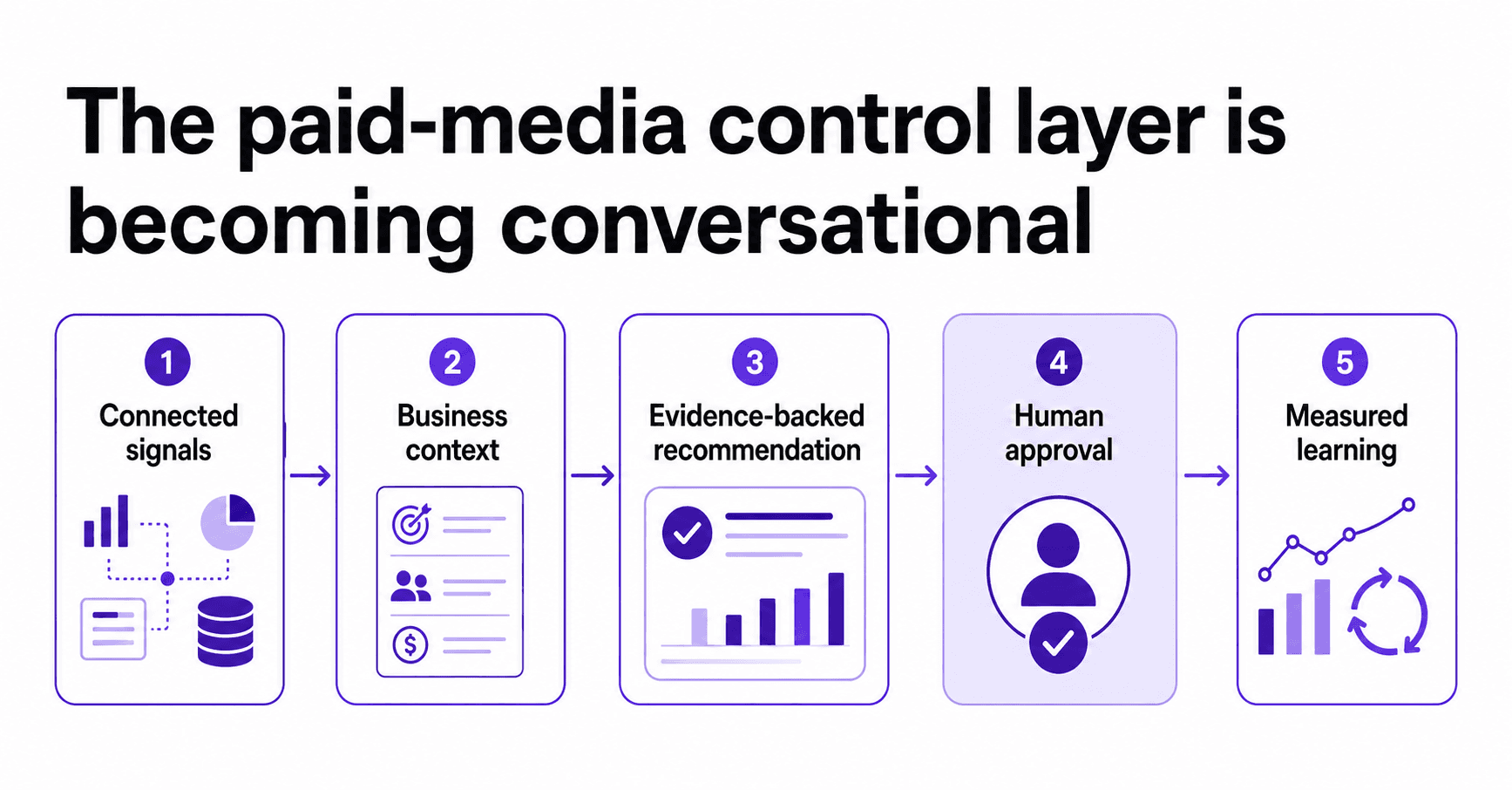
The next paid-media interface is not another dashboard.
It is a conversation.
Meta has introduced new features that let Meta AI work across Facebook and Instagram analytics, Meta ad campaigns and Google Workspace. Marketers can ask what is working, what has changed and what to do next. Meta says the assistant can turn this context into reports, decks and recurring tasks. [Source]
OpenAI is moving in the same direction from another part of the market. Its ChatGPT Ads expansion to 31 European markets puts brands closer to people who are not just scrolling a feed or entering a keyword. They are explaining a goal, comparing options and asking for help making a decision. [Source]
These are different products. They point to the same shift.
Paid media is becoming conversational.
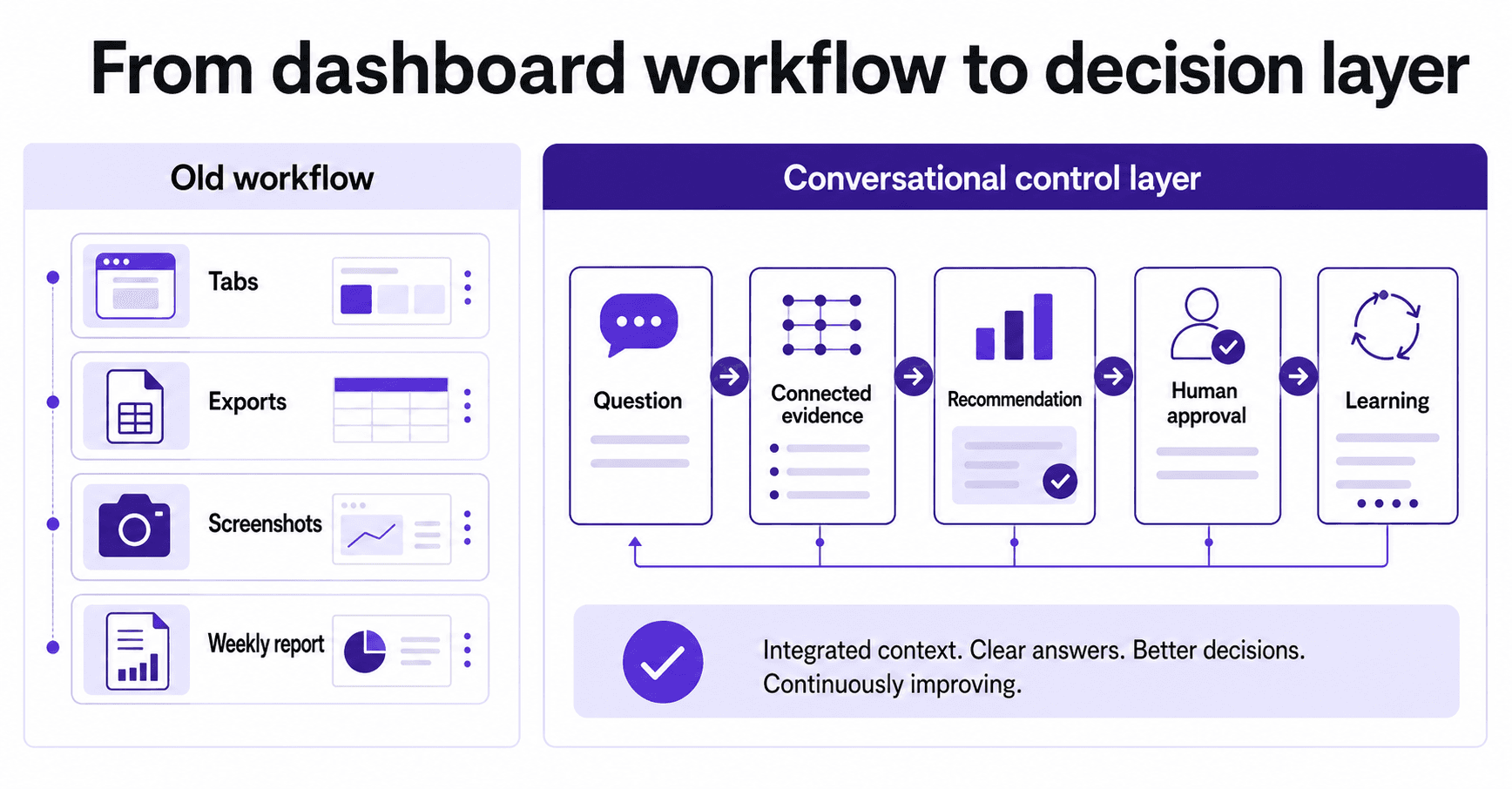
For years, the work has lived in tabs, exports, screenshots and weekly reports. A performance marketer would open a dashboard, notice a movement, ask a few questions, pull a few more reports, then turn the work into a recommendation.
Now the first step can be a plain-language question: Why did lead quality fall last week, even though Meta CPA improved?
That sounds useful. It is useful.
But it also exposes the next problem.
A fast answer is not automatically a dependable decision.
WHAT IS ACTUALLY CHANGING
Meta’s new features bring campaign, organic-performance and Workspace context into a single AI conversation. Its stated goal is to help businesses understand performance, identify what is resonating, surface possible budget and creative changes, and automate reporting work.
ChatGPT Ads create a different kind of conversational moment. OpenAI says the ads sit alongside decision-making journeys, where people can explain their goals and constraints rather than reduce them to a few search keywords. OpenAI also says ads are labelled, separate from answers and do not influence ChatGPT’s answers.
The important point is not that every marketer should rush to use every new interface. It is that the old control layer is changing shape.
Instead of navigating to a report, teams will increasingly ask: What changed? What is likely driving it? What should we investigate first? What would happen if we moved budget? Can you turn this into a client-ready recommendation?
That reduces genuine operational friction. It can also make a weak recommendation feel more persuasive because it arrives quickly, in fluent language and with a neat narrative.
THE REPORT CAN BE CORRECT AND STILL BE INCOMPLETE
Consider a familiar Monday-morning problem.
Meta cost per acquisition is rising. Click-through rate is stable. The platform suggests shifting budget toward the cheapest audience. Sales says lead quality has softened. The landing page was updated three days ago. Google branded search is flat. A new creative concept has higher engagement but lower last-click conversion.
A Meta-only answer may reasonably advise cutting the expensive ad set.
A cross-channel answer may land somewhere else. The actual issue could be the landing page, the offer, a sales-follow-up delay, a tracking change or an intentional audience shift. Pausing the campaign could remove the one creative that is still helping the top of the funnel.
The report was not wrong. It was incomplete.
This is the core operating problem in conversational paid media. An AI assistant can be very good at identifying a pattern in the data it sees. It cannot responsibly decide what the pattern means unless it can see enough of the business context behind it.
THE CONTROL LAYER TEAMS ACTUALLY NEED
1. Connected signals
A recommendation should not start with one channel in isolation. It needs relevant signals from media platforms, analytics, CRM outcomes, creative performance and the funnel. This does not mean pouring every source into every prompt. It means retrieving the context that matters to the decision.
2. A clear business objective
“Lower CPA” is not always the objective. A team may be trying to grow qualified pipeline, improve direct bookings, protect a premium brand position or reduce dependency on a single channel. The assistant needs that definition of a good outcome before it recommends a move.
3. Evidence, not just a conclusion
A strong recommendation should show its work. What changed? Which signals support the explanation? What does the system not know? Which alternative explanation was considered? A team should be able to inspect the evidence before it acts.
4. A human decision boundary
Analysis can be conversational. Accountability cannot be outsourced. The right early use of these systems is to read, diagnose and prepare. Use them to create a first draft of the weekly narrative, identify a likely creative-failure pattern or propose a constrained test. Do not confuse that with giving an agent an unrestricted budget dial.
5. A learning loop
Every approved action should create learning. If a budget change, creative refresh or landing-page test goes live, the team needs to know what happened, whether the original diagnosis held and what should change next time. Without this loop, conversational AI becomes a faster way to produce opinions.
WHAT THIS MEANS FOR AGENCIES
The easy reading is that conversational interfaces make agencies less valuable because report production gets cheaper.
The first half is true. Manual assembly of screenshots, exports and standard commentary should get cheaper.
The second half misses where client value lives.
Clients do not really pay for a deck of metrics. They pay for a team that can explain the trade-off, connect platform data to commercial reality, make a recommendation that is safe to test and take responsibility for the decision process.
That work becomes more important as platforms make their own recommendations more accessible.
Meta can explain what its ad account sees. ChatGPT can create a new discovery and decision environment. Google can forecast a platform-level budget change. Each is useful. No single platform can fully define the business outcome for a brand or agency client.
The agency operating advantage is the ability to connect the evidence across the funnel, maintain the client’s constraints and create a disciplined cadence from diagnosis to action to learning.
WHERE THIRD I FITS
At third i, we think the useful AI layer is not a generic chat window attached to a dashboard.
It is a cross-channel marketing context and action layer.
That means connecting the signals a team already uses, grounding recommendations in objectives and history, making evidence inspectable, and preserving a human approval step before material changes happen.
For teams that prefer working in an AI assistant, third i’s MCP workflow can bring authenticated marketing context into supported AI workflows without sharing ad-platform passwords with the AI provider.
The aim is not to turn a model into an unsupervised media buyer. It is to reduce the gap between data, diagnosis, recommendation and the person who has to make the call.
WHAT TO DO THIS QUARTER
1. Map the questions your team repeatedly asks. Start with questions that currently require exports, screenshots and follow-up messages.
2. Define the decision inputs. List the signals, constraints and business outcomes that must be visible before action.
3. Start read-only. Let AI retrieve, explain and prepare. Keep live changes reviewable and human-approved.
4. Require evidence in every recommendation. A useful answer names its data, assumptions and proposed test.
5. Measure the decision process, not only time saved. Faster reporting matters. Better commercial decisions matter more.
The paid-media control layer is becoming conversational.
The winning teams will not be the ones that ask an AI the most questions. They will be the ones that build the strongest context, the clearest guardrails and the most reliable route from recommendation to accountable action.
FAQ
What does conversational paid media mean?
Conversational paid media means marketers can ask an AI assistant natural-language questions about campaign performance, creative, audiences, budgets and reporting, rather than manually assembling answers from dashboards and exports.
Is conversational AI safe to use for paid-media decisions?
It can be useful when it is grounded in relevant context, shows evidence and works inside clear permissions. Start with read-only diagnosis and proposal preparation. Keep a human approval step before material campaign changes.
Why is cross-channel context important for AI campaign recommendations?
A platform metric can be affected by factors outside that platform, including landing-page performance, CRM outcomes, sales follow-up, tracking and brand demand. Cross-channel context reduces the risk of optimising a local metric at the expense of the business outcome.
See this on your own accounts
third i connects to the platforms you already run and does this work against your live numbers.
Read more
View all articles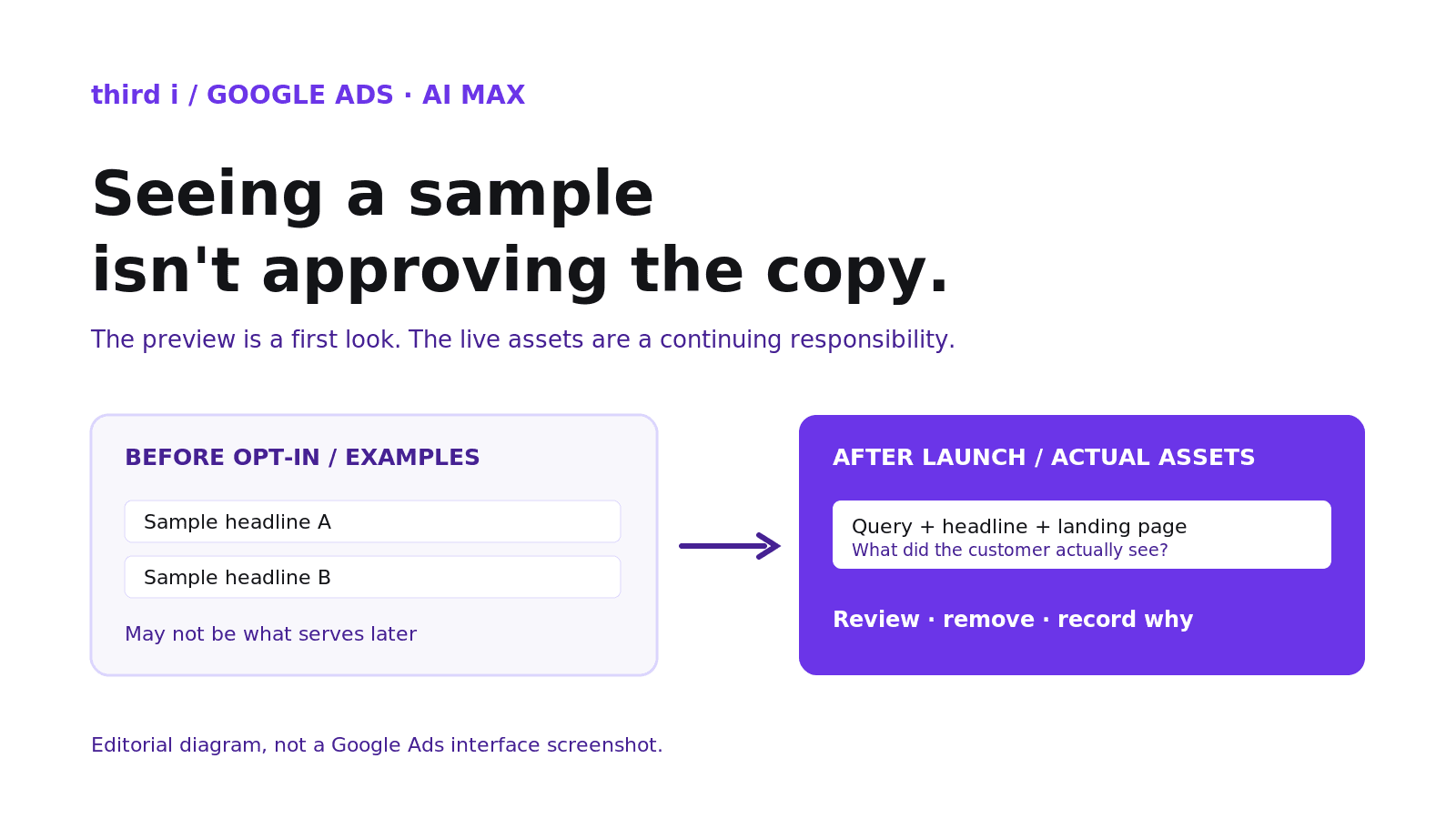
AI Max Copy Preview: Seeing a Sample Isn't Approving It
Google Ads now shows sample AI Max headlines before opt-in. Here is why previewing examples is useful, but does not replace reviewing the copy that actually serves.

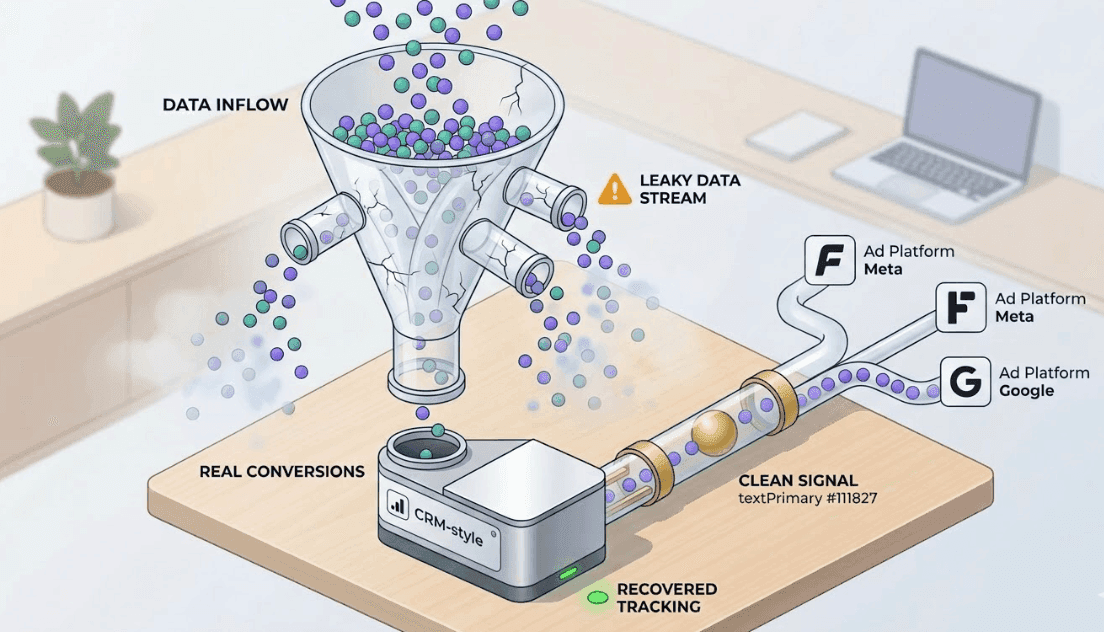

The Secret to Successful Paid Marketing: Strategy Meets Structure
Paid marketing is a powerful tool for driving immediate results, but its success hinges on having a clear strategy and structured execution. Without proper planning, preparation, execution, and optimization, campaigns can waste resources and miss opportunities. A checklist streamlines the process,…