
Your AI Agent Can Reach the Internet. That Still Doesn’t Make It Ready for Marketing.
Agent Reach shows how quickly AI agents can gain access to the web, social platforms and research tools. For marketers, the real question is what context, permissions and review sit behind that access.
An AI agent that can reach the internet feels like a major step forward.
It is.
Projects such as Agent Reach make the idea concrete. They package access to web pages, YouTube, GitHub, RSS and harder-to-reach social or community platforms, then choose and health-check the underlying tools.
That removes a real frustration. A useful agent needs more than a chat window. It needs sources.
But there is a mistake waiting on the other side of that capability.
When an agent can read more, search more and pull more signals, it can also produce more confident-looking answers with less obvious blind spots.
For marketing teams, access is not the finish line. It is the first dependency.
The harder question is: what business context, permission boundary and human review sit between an agent finding something and someone acting on it?
That is the difference between an agent that is interesting in a demo and one that is dependable in a real operating rhythm.
What Agent Reach gets right about AI agents and the open web
Agent Reach is best understood as a capability layer, not a magical browsing model.
Its job is to help an agent find a workable route to information. The project maintains primary and fallback paths for tasks such as reading web pages, finding YouTube transcripts, checking GitHub, parsing RSS, and accessing selected social and community platforms. It also includes a diagnostic command, agent-reach doctor, to show which routes are actually working.
That design matters because the web is not one clean database.
A public blog post is easy to read. A YouTube transcript is a different workflow. Reddit, X, Xiaohongshu and other logged-in or bot-protected platforms introduce browser sessions, cookies, platform restrictions and changing access paths. Agent Reach’s useful contribution is acknowledging that access is operational work, then treating it as something that needs routing and health checks.
For a research agent, this can be genuinely helpful.
An agency strategist could use it to collect a week of public discussion around a category. A product marketer could turn a set of videos and public posts into a research brief. A founder could ask for the recurring questions people are raising about a new platform launch.
That sounds useful. It is useful.
But a pile of accessible information is not yet a decision.
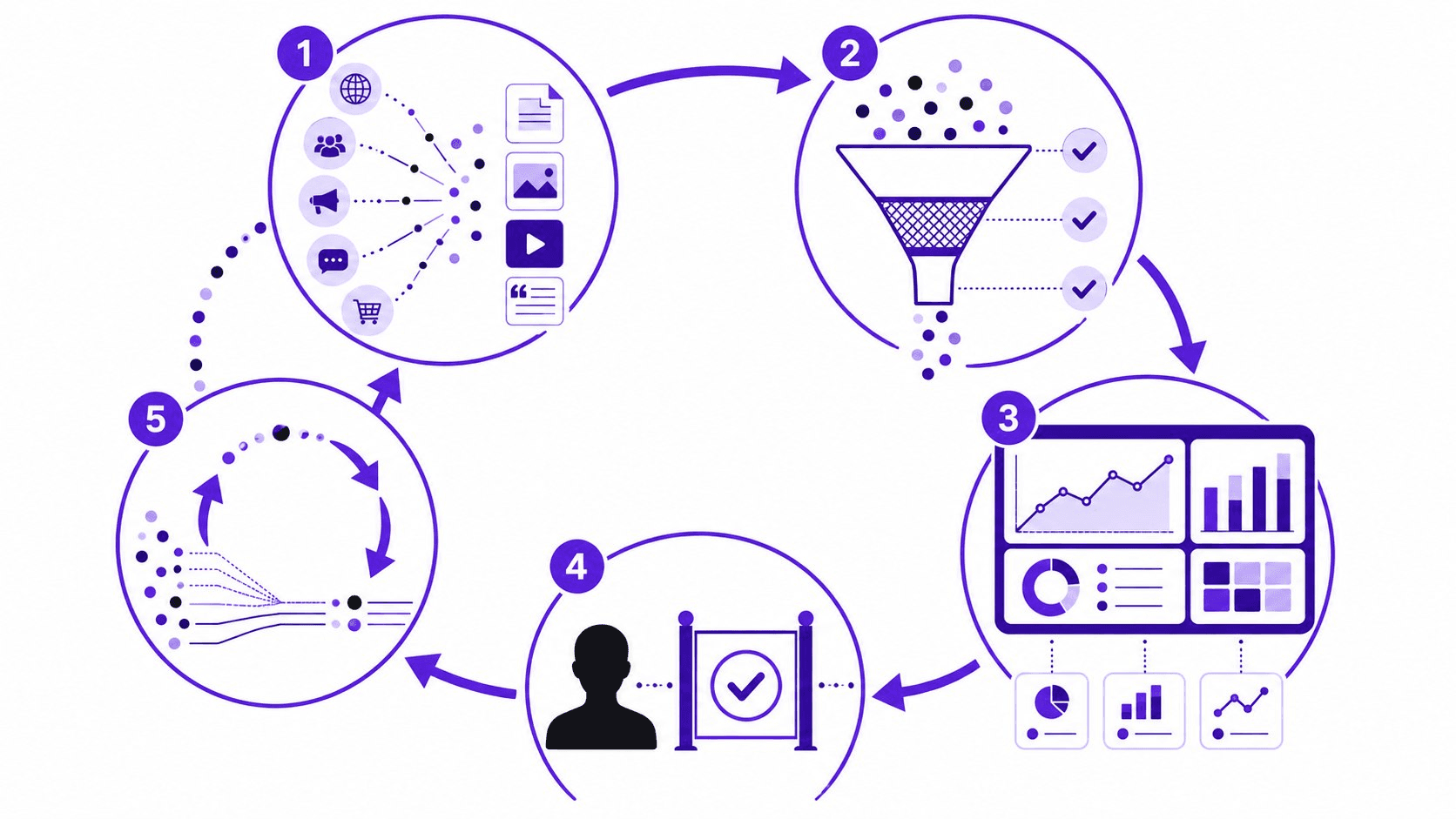
*Operating visual alt text: A five-step decision path from internet reach to source qualification, marketing context, human approval and measured learning.*
More reach can create a more subtle failure mode
The obvious risk is that an agent cannot access the information it needs.
The more subtle risk is that it can access plenty of information, but still cannot tell what matters to your business.
Imagine asking an AI agent why a campaign’s cost per acquisition has risen.
A web-connected agent might find commentary about a platform change, competitor campaigns, seasonal demand, creative trends and landing-page advice. It may even return a tidy answer with links.
None of that tells it whether your own CPA movement came from:
- a new offer or pricing change;
- an audience change inside the account;
- a drop in landing-page conversion on mobile;
- slower sales follow-up;
- a tracking issue;
- an intentional shift towards a different customer segment; or
- a creative test that is doing its job higher in the funnel.
The answer can sound informed and still be incomplete.
I wrote recently about GPT-5.6 Sol, Terra and Luna with a similar concern. The useful question was not simply which model to use. It was what happens when every marketing team can produce more analysis, more ideas and more output than it can properly evaluate.
The same point applies here.
Model capability expands what an agent can do. Internet reach expands what it can see. Neither tells it what a good outcome is for your account, your client or your brand.
Read the practical guide to GPT-5.6 Sol, Terra and Luna for marketing teams and agencies for that earlier argument.
The four layers an AI marketing agent needs after web access
A useful marketing agent needs reach. It also needs four more layers.
1. Source qualification
Not every accessible source deserves equal weight.
An official platform announcement, a live account metric, a customer interview, a creator’s opinion and an anonymous forum comment can all be useful. They are not interchangeable.
A capable system should show where a claim came from, distinguish first-party evidence from commentary, and say when the evidence is weak or contradictory.
This is especially important when an agent reads social content. The loudest reaction is not always the most representative one. A thread can reveal a real implementation issue. It can also turn one unusual experience into a false market conclusion.
2. Marketing and business context
This is the part generic web access cannot supply.
An agent needs to understand the objective, the funnel stage, the account history, the constraints and the definition of a good result. It needs connected evidence from the systems where the work actually happens.
At Thirdi, that means bringing together marketing performance across connected sources such as Meta, Google Ads, TikTok and Google Analytics, then making that context available in an AI workflow.
Our MCP connector for ChatGPT, Claude, Gemini and other compatible assistants is built around this practical distinction. An assistant can ask better questions when it is working from authenticated marketing context, rather than a CSV export or a generic web search.
The web can tell you what people are saying about a trend.
Your own data tells you whether that trend is changing your business.
3. Permission and containment
Reach needs boundaries.
Agent Reach’s own documentation is candid that some optional paths rely on local browser sessions or cookies, and that platforms may restrict automated use. That is a sensible warning.
For a marketing system, the principle goes further. An agent should have clear read, draft and write permissions.
- Read: inspect data, public sources and account history.
- Draft: prepare a brief, report, hypothesis or proposed change.
- Write: alter a budget, publish a campaign, change a feed or send something externally.
These are different trust levels. They should not be treated as one permission called “agent access.”
Most teams should start with read-only research and analysis. The next useful step is drafting. Any live change should be explicit, reviewed and logged.
That is not a limitation of AI. It is how you make automation accountable.
4. Learning after the decision
The final layer is often missed.
If an agent recommends a creative test, identifies a competitor pattern or suggests a budget move, the system needs to capture what happened next. Did the hypothesis hold? Did the result improve? What changed in the account at the same time?
Without that loop, the agent keeps generating plausible recommendations without becoming more useful to the team.
With it, a marketing team can build a durable decision memory: what it observed, what it tried, what worked, what did not and under which conditions.
That is where the advantage compounds.
A practical workflow: use web reach as an input, not an instruction
Here is a safer way for an agency or brand team to use a web-connected agent.
Step : Observe
What the agent does: Collect public discussion, launch information, competitor signals and relevant sources
What the team owns: Define the research question and acceptable sources |
Step: Qualify
What the agent does: Separate official facts, practitioner observations and weak signals
What the team owns: Decide what evidence is credible enough to influence a plan |
Step: Connect
What the agent does: Compare external signals with performance, creative, funnel and sales context
What the team owns: Supply the business objective and account constraints |
Step: Recommend
What the agent does: Draft hypotheses and ranked next questions
What the team owns: Challenge assumptions and choose the action |
Step: Learn
What the agent does: Record the decision and measure the outcome
What the team owns: Update the operating rule or test plan |
Consider a launch on a major ad platform.
A web-connected agent can quickly gather the official announcement, early practitioner reactions, public examples and implementation questions. That can shorten the research phase considerably.
But the marketing decision still belongs inside the account’s reality.
Should you test the feature now? Which campaign is suitable? What budget can move? Is it safe for a regulated category? Does the landing page support the new traffic? What would count as success?
Those are not web questions. They are operating questions.
Why this matters even more for agencies
Agencies will feel this shift early.
More agents will be able to create first-pass research, summaries and competitor observations. The manual collection of screenshots and links will become cheaper. That is good.
The agency work that remains valuable is the work that turns evidence into a recommendation a client can trust.
That means:
- separating signal from noise;
- connecting platform results to the rest of the funnel;
- explaining the trade-off behind a recommendation;
- keeping client-specific constraints intact; and
- deciding when the evidence is not strong enough to act.
This is why I do not see agent access as a reason for agencies to become less valuable. I see it as a reason for the best agencies to become more explicit about their operating craft.
Thirdi’s agency operating layer is designed for that job. It helps teams turn scattered channel data into visible, evidence-backed actions while keeping the accountable person in control.
The real question is not whether your agent can browse
Agent Reach is a useful marker of where the ecosystem is going.
Agents are becoming easier to connect to the open web, public communities and the tools people already use. The access layer will keep getting better.
Good. It should.
But the companies that get lasting value will not be the ones with the most tabs open or the longest list of agent tools.
They will be the ones that can answer four questions clearly:
1. What sources does this agent trust, and why?
2. What business context does it have before it recommends anything?
3. What is it allowed to read, draft or change?
4. How do we learn whether its recommendation improved the outcome?
Reach gives an agent more to see.
Context gives it a reason to matter.
And a human decision boundary is what makes the whole system worth trusting.
FAQ
What is Agent Reach?
Agent Reach is an open-source capability layer for AI agents. It helps agents access and diagnose routes to web pages, GitHub, YouTube, RSS and selected social or community platforms through a mix of command-line tools, browser-session paths and fallback routing. See the project’s official README for its current supported platforms and setup options.
Can an AI agent with internet access make marketing decisions automatically?
It can help research, collect evidence and prepare a recommendation. Internet access alone does not provide the account history, business objective, permission boundary or accountability needed to make safe marketing decisions. Start with read-only analysis and human-reviewed drafts.
What is the difference between web access and marketing context?
Web access lets an agent read public information and external discussion. Marketing context connects that information to your authenticated performance data, funnel signals, goals, historical learning and operational constraints.
How can agencies use web-connected AI agents safely?
Use them first for research and source collection. Require source attribution, preserve client-specific context, separate read/draft/write permissions, and keep a human approval step before material external or account changes.
See this on your own accounts
third i connects to the platforms you already run and does this work against your live numbers.
Read more
View all articles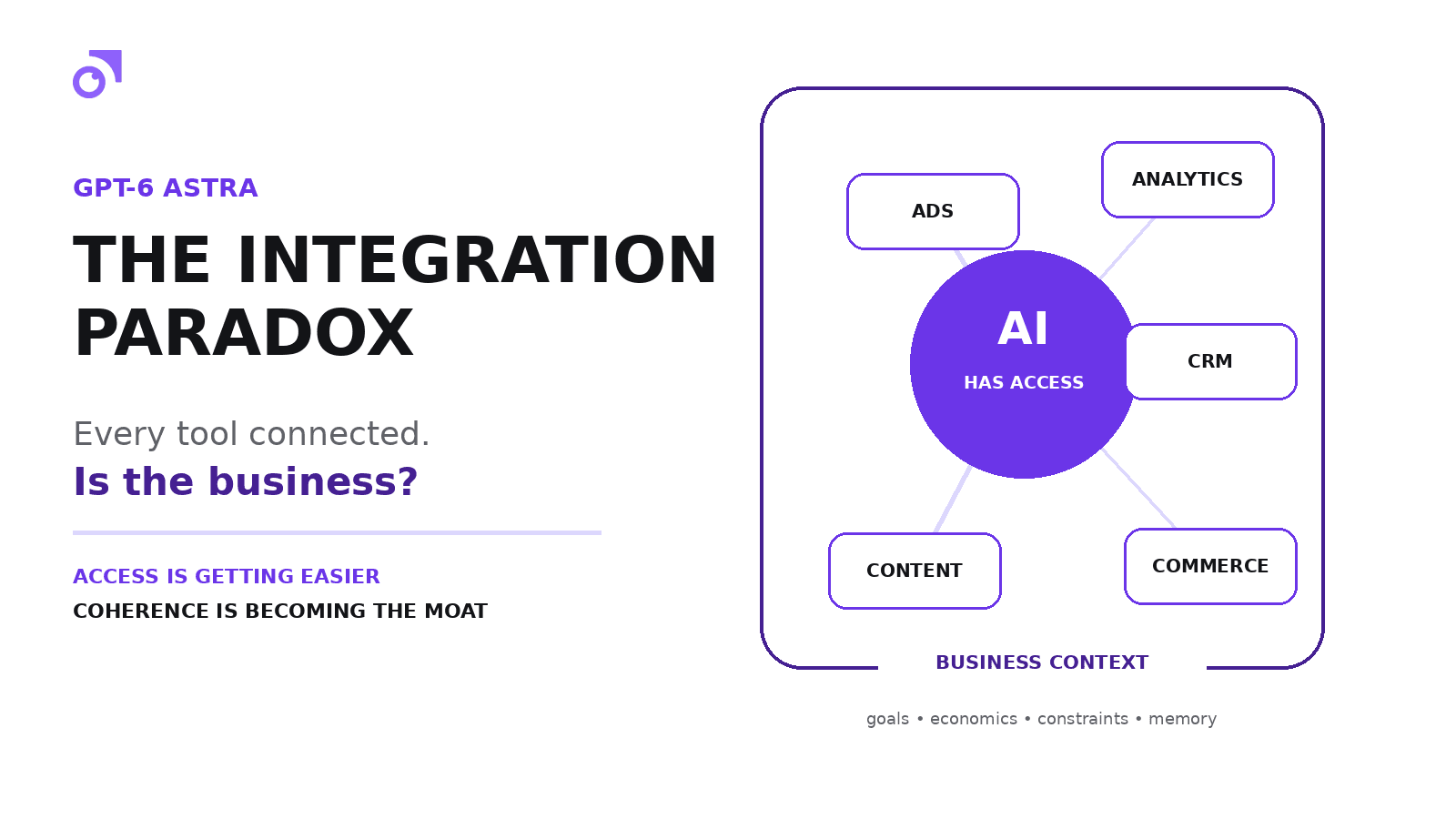
GPT-6 Astra and the Integration Paradox: When AI Can Use Every Tool, Business Context Becomes the Moat
GPT-6 Astra can operate more software, but useful marketing still depends on connected goals, economics, constraints, decision history and human approval.

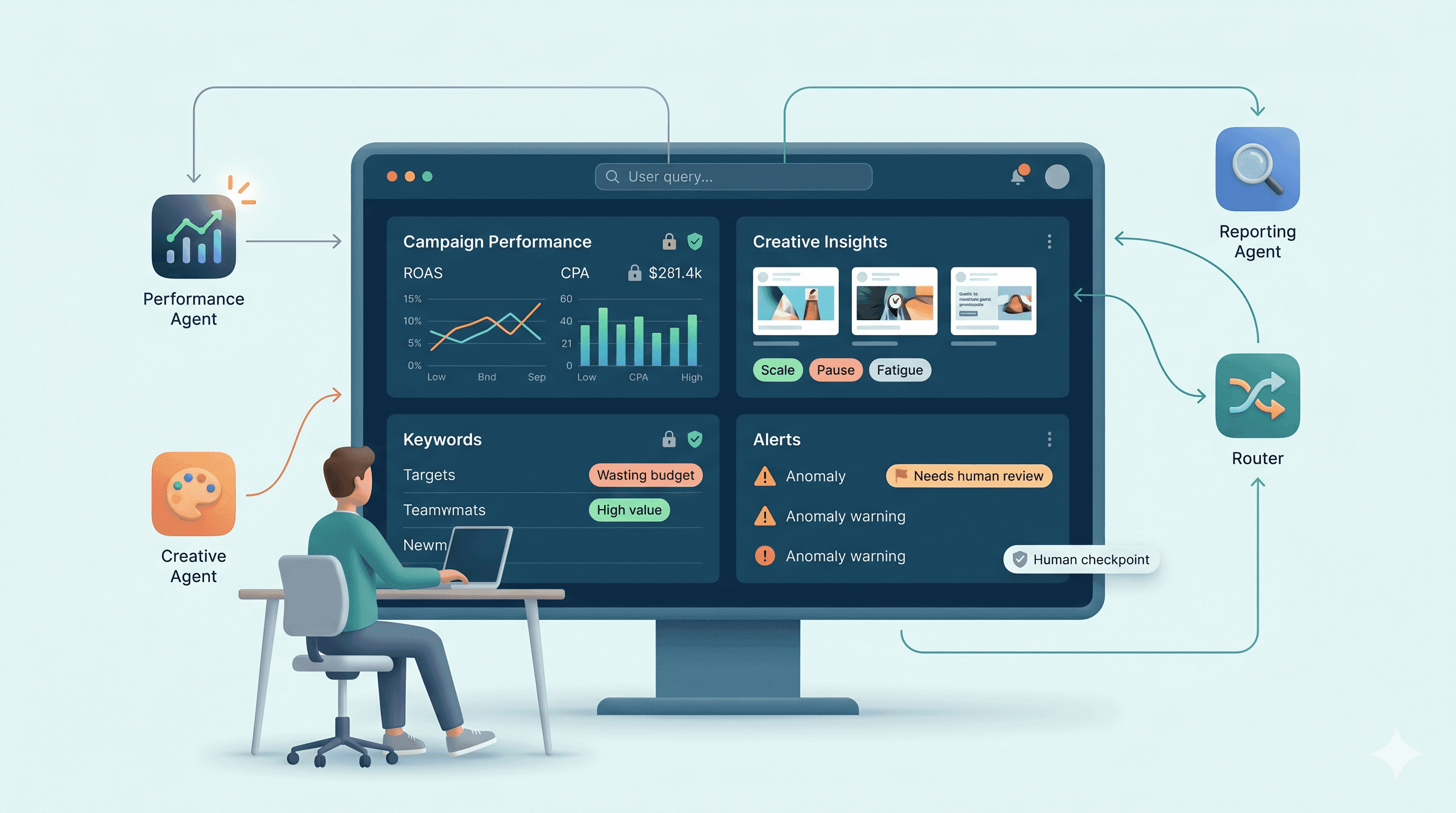
Winning With AI Agents Has Very Little To Do With The Model You Pick
If you run performance marketing today, you hear the same question every time AI agents come up: “So, which model are you using?” For real-world results, that is the least useful place to focus. The teams that are quietly getting better ROAS, lower waste, and fewer surprises from AI agents are not…

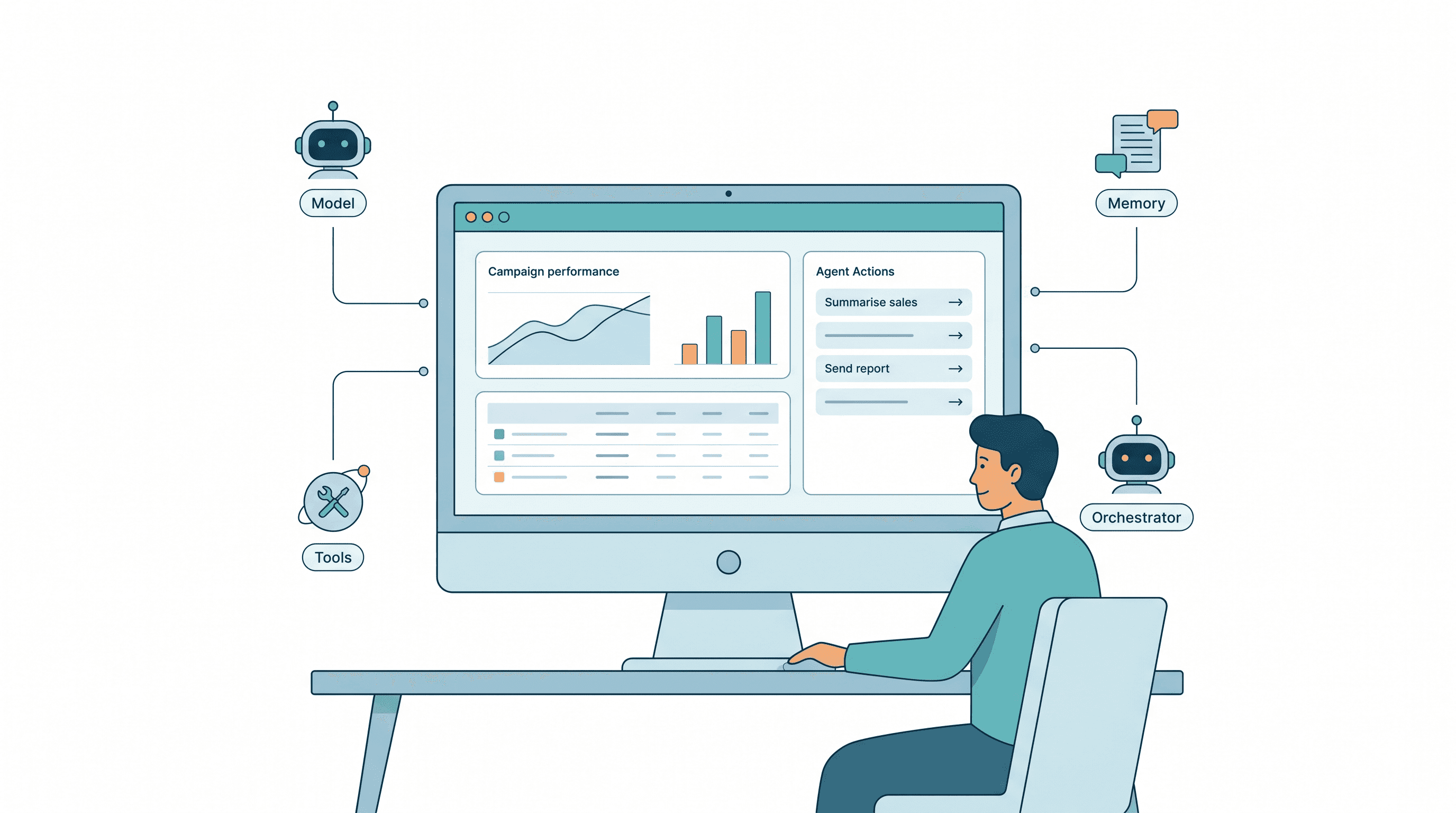
AI Agents Under The Hood: How They Really Work
This post explains that AI agents are not magic robots, but tools built on one simple trick: predicting the next word very well, then wrapping that prediction engine with rules, tools, and memory so it can actually do jobs for you. It shows how this setup lets you talk to software in plain language…
