
Google Demand Gen Holiday Guide: Why Creator-Proof Creative Matters
Google’s July Demand Gen Drop is a cue for retail teams. Learn how to build creator-proof holiday creative systems that turn inspiration into action
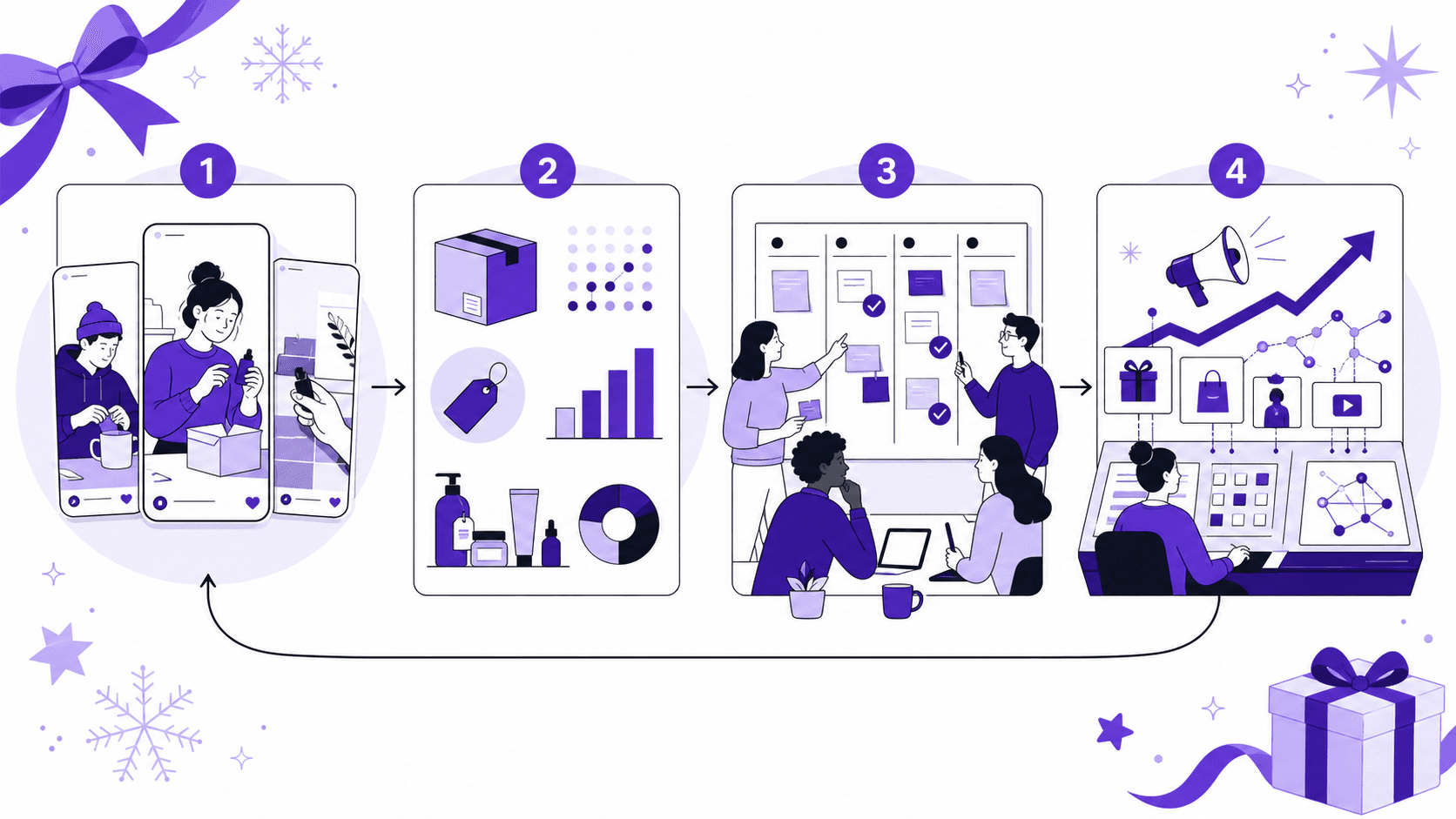
Holiday creative does not fail because teams have too few assets.
It fails because the team cannot decide which stories are worth making, which proof the audience needs, and what should change after the first wave of performance data arrives.
That distinction matters this year.
Google’s July 2026 Demand Gen Drop is framed around retail readiness for the holiday season. Google points to a simple behaviour. Shoppers use video and real people for visual validation. Google says that 94% of holiday shoppers who used YouTube took a further step towards purchase after watching a related video.
The temptation is predictable. Make more videos. Add more creator clips. Feed the campaign more variants.
That sounds useful. It is useful.
But volume is not the operating advantage. The advantage is a creative system that can turn human proof into a clear, repeatable campaign decision.
What “creator-proof” actually means
Creator-proof creative is not the same as hiring a creator and cutting their video into an ad.
It means the creative has the qualities that make people stop, believe and keep watching:
- A real person or recognisable human point of view.
- A specific problem, use case or moment of doubt.
- Product evidence that feels demonstrated, not merely claimed.
- A reason to act now.
- A format that works naturally in a vertical-video feed.
The word “proof” matters.
A beautiful product shot can create interest. A useful demonstration can remove hesitation. A good holiday ad needs both. It has to earn attention and then give the shopper enough confidence to take the next step.
Google’s broader direction reinforces this. It is investing in closer brand and creator connections, using AI to understand content and audiences, and helping brands match with relevant creator communities. The shift is not just towards more generated assets. It is towards assets with more credible context.
Why the usual asset factory breaks down
A typical holiday brief is written around deliverables.
“Six statics. Four short videos. Two creator edits. One product montage.”
That gives the team a production count. It does not give the team a creative learning system.
When the campaign starts, the questions are harder:
- Which hook made people stop?
- Which creator angle built trust?
- Was the issue attention, product understanding or checkout friction?
- Which audience responded to which proof point?
- What should the next version preserve, remove or test?
If the work is scattered across a brief, a shared drive, a chat thread and an ad dashboard, learning gets lost. The team can make more assets and still become less certain about what it has learned.
That is why creator-proof creative needs a process, not a content pile.
The creator-proof creative loop
A practical holiday creative system has five stages.
Stage 1. Define the shopper moment
The question: What hesitation, need or occasion does this creative need to resolve?
Output: A sharp creative job, not a vague audience label.
Stage 2. Gather proof
The question: What can a real person show, say or compare that makes the claim believable?
Output: Product demonstration, customer language, creator angle or use case.
Stage 3. Build distinct routes
The question: What are the few genuinely different stories to test?
Output: Hooks and storyboards built around different proof points.
Stage 4. Launch with intent
The question: Which asset is for discovery, consideration or conversion?
Output: Clear campaign placement and success criteria.
Stage 5. Learn and decide
The question: What did the audience respond to and what should happen next?
Output: A decision to scale, refresh, reframe or fix the journey.
This is the missing link between “creative performance” and marketing operations.
A team should not only know that a video underperformed. It should know whether the opening failed, the product proof was weak, the offer was unclear, or the post-click experience did not match the expectation set by the ad.
A holiday example
Take a gifting brand selling premium self-care products.
One route shows a polished product montage. Another follows a creator explaining why they keep one item in their desk drawer for stressful workdays. A third is built around a last-minute gifting problem, with the product and delivery promise shown clearly.
The first route may get attention. The second may build belief. The third may get the highest purchase intent.
The point is not to declare a winner before launch. The point is to run the test with a useful hypothesis.
If the creator route gets strong views but weak clicks, the problem might be the offer or CTA. If the gifting route gets clicks but poor conversion, the product page or delivery expectation may need work. If the polished montage does not hold attention, the team may need a stronger human opening.
That is a very different conversation from “we need more assets.”
What Google’s Demand Gen update changes
Google’s July update includes retail-focused best practices, wider Checkout Links availability in additional markets, and changes designed to make Demand Gen more useful for seasonal demand.
The operational takeaway is simple. The journey from inspiration to purchase is getting shorter. Creative, product feed, destination and checkout experience need to work as one system.
A compelling creator clip cannot rescue a confusing product page. A good product feed cannot compensate for a weak story. A fast checkout link is valuable only if the shopper reaches it with enough confidence to use it.
Holiday preparation should therefore include a creative-and-journey review:
1. Is there a clear human proof point in the creative?
2. Does the product or offer shown match the landing experience?
3. Is the destination appropriate for the shopper’s intent?
4. Can the team see where attention becomes action or drops away?
5. Is there an agreed response when a route shows early promise or early fatigue?
The role of AI is to preserve the learning
AI can speed up ideation and production. It can summarise creator research, generate variations, organise assets, tag recurring patterns and flag performance changes.
That is not the most important part.
The more valuable job is preserving context across the workflow. The system needs to know the original strategy, the customer question the creative was designed to answer, the inputs that shaped it, the campaign where it ran, and the result it produced.
Without this context, an AI tool can create an endless stream of plausible content. With it, the team can build a marketing memory.
At Thirdi, this is the direction we care about. Marketing work should not disappear into separate tools after every hand-off. The system should help a team carry its business goals, creative choices, performance evidence and next decision through the whole process. Humans still decide what is worth making, approving and scaling. The system makes that decision easier to ground.
How agencies can use this with clients
Agencies have a chance to make their value more visible here.
Do not ask a client for “more creator content.” Ask for the inputs that will create better proof:
- the objections sales teams hear repeatedly;
- the product moments customers struggle to understand;
- the phrases customers use when they recommend the brand;
- the seasonal situations that make the purchase more urgent;
- the delivery, returns or bundle details that reduce hesitation.
This changes the brief. It also changes the client conversation from asset production to commercial problem-solving.
The agency becomes the team that can connect a creative decision to an audience insight, a product truth and a measurable next step.
The holiday checklist
Before the peak season, every retail team should be able to answer:
- Which three shopper moments matter most?
- What proof will make each moment believable?
- Which creative routes are genuinely different?
- Where will each route send the shopper?
- What will tell us whether to scale, refresh or change the journey?
If the answer is a spreadsheet full of asset names, the system is not ready yet.
The best holiday creative programme will not be the one with the biggest production count. It will be the one that makes the next decision easier.
FAQ
What is Google Demand Gen?
Demand Gen is Google’s AI-powered campaign type for driving demand across Google’s visual and entertainment surfaces. It is designed to help advertisers use engaging visual creative to reach and convert prospective customers.
Why does creator content matter for holiday campaigns?
Creator-style content can provide human context and product validation. It can help shoppers understand how a product fits into a real use case, rather than only showing a polished product claim.
Should every holiday campaign use creators?
No. The useful question is whether a real human perspective or demonstration will reduce a meaningful shopper hesitation. Some creative needs a creator. Some needs a product comparison, an offer explanation or a clear gifting use case.
Next step
If your creative team is producing more but learning less, build a workflow that connects the brief, evidence, asset, campaign and next decision. Explore Thirdi’s competitor research workflow (https://thirdi.ai/competitor-research) or book a working session (https://thirdi.ai/contact).
See this on your own accounts
third i connects to the platforms you already run and does this work against your live numbers.
Read more
View all articles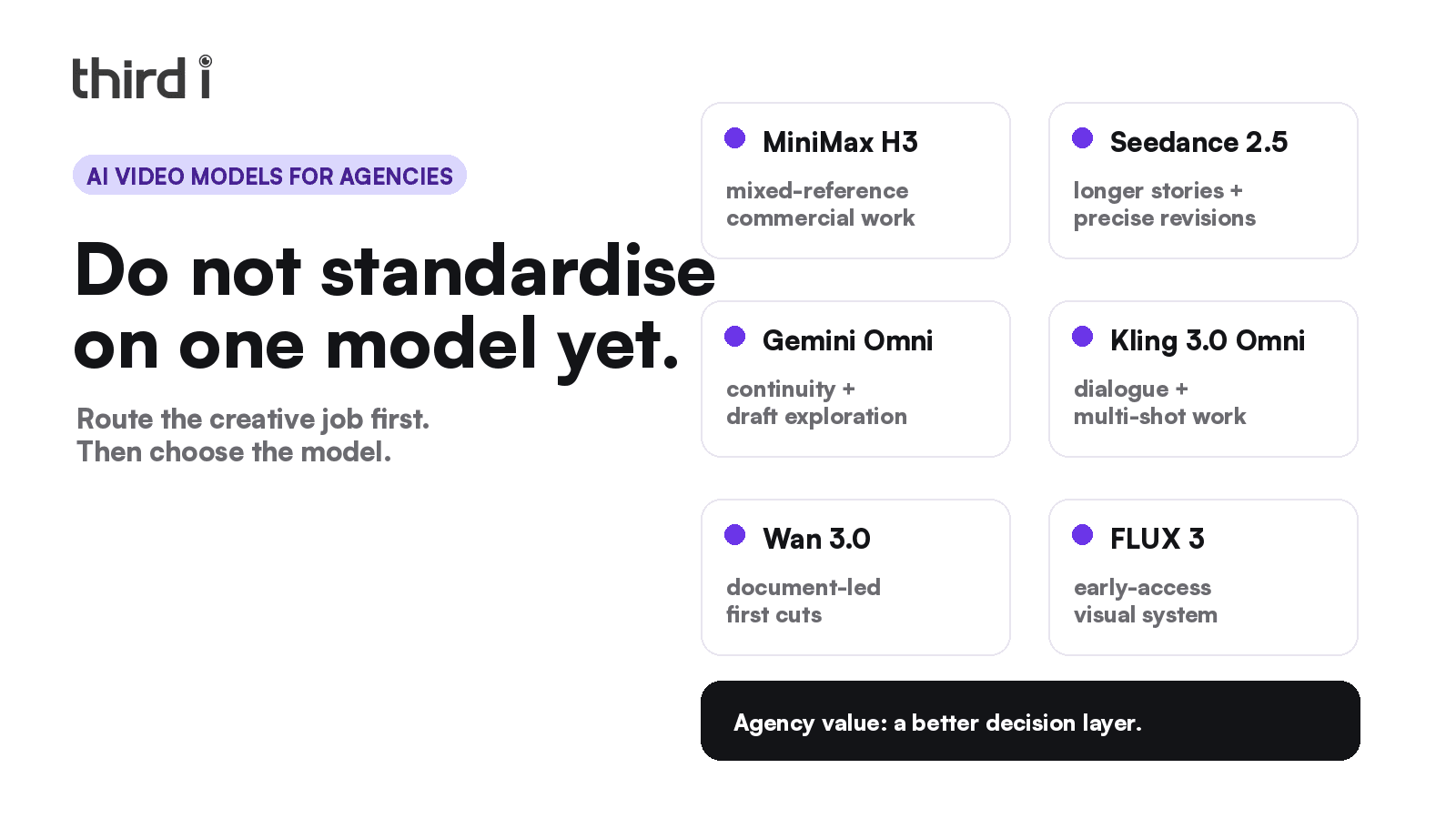
MiniMax H3 vs Seedance 2.5 vs Gemini Omni vs Kling vs Wan 3.0 vs FLUX 3 for Agencies
A practical guide for agencies comparing six leading AI video models by the production job, controls, review burden and client risk that actually matter.


Image Discovery Changes the Job of Brand Creative
Google’s new Images experience is a useful signal: creative is moving from something brands publish into something people browse, save and return to. That changes what marketers need to research before they make the next asset.
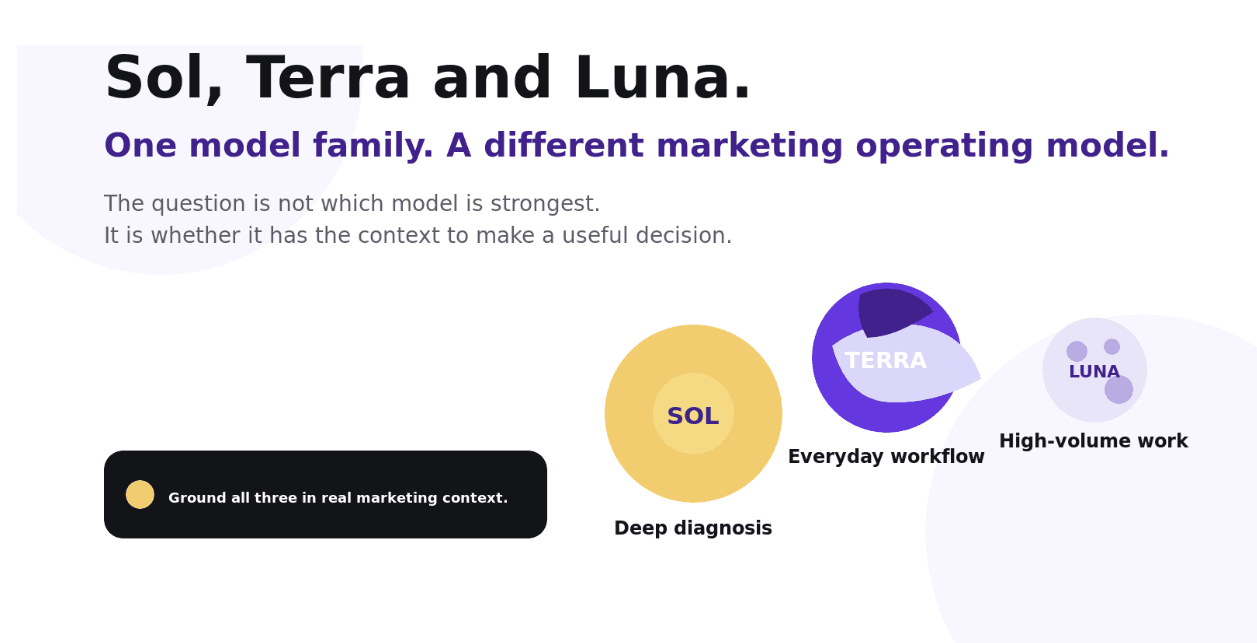
GPT-5.6 Sol vs Terra vs Luna for Marketing Teams and Agencies
A founder's practical guide to using GPT-5.6 Sol, Terra and Luna in marketing. Learn which model fits each job and why connected context matters more than raw capability.