
Image Discovery Changes the Job of Brand Creative
Google’s new Images experience is a useful signal: creative is moving from something brands publish into something people browse, save and return to. That changes what marketers need to research before they make the next asset.

For 25 years, Google Images largely began with a query. You knew what you were looking for, then you searched.
Google’s latest update makes a different bet. In its announcement, Google describes a new browseable Images homepage: a dynamic gallery shaped around a signed-in user’s interests and the ideas they save. Collections appear as tabs, making it easier to return to an interest and keep exploring.
For now, the browseable homepage is rolling out on desktop, in English, for signed-in users in the U.S. It is not a global behaviour we should pretend has already arrived everywhere. But it is a clear signal of where visual discovery is heading.
The point is no longer only to answer a visual query. It is to keep visual exploration going.
Google Images is becoming a discovery surface
The old job of an image was reasonably clear. Explain the product. Fit an ad placement. Support a landing page. Match a query someone had already typed.
The emerging job is more demanding. An image has to make sense in a browsing moment before a person has formed a precise search. It may need to reward a pause, create recognition, help somebody imagine an outcome or give them a reason to save an idea and come back later.
An image is no longer only an answer to a query. It can be the beginning of one.
This is not just an ecommerce question. It matters whenever a brand is trying to create demand before the buyer has reduced their intent to a keyword, product-page visit or clean attribution path.
The job of brand creative is changing
A campaign asset used to have a fairly contained job. It had to communicate a message and perform inside a placement. In a more interest-led visual environment, creative also has to earn its place among the references, aesthetics and category signals people are already consuming.
That does not mean every image has to be “scroll-stopping”. It means the creative team needs a clearer view of the visual language already shaping the audience’s expectations. Which product framings recur? Which offers and calls to action dominate? Which moods, formats and stories have become background noise?
The useful question is not, “Can we make this image?” It is, “What is the market teaching this buyer to expect, and where is there room for a point of view that is genuinely ours?”
More image generation is not the hard part
The same Google update also brings image generation into AI Overviews. More people will be able to move from a prompt to a custom visual. That sounds useful. It is useful.
But it makes the wrong response more tempting: create more, faster.
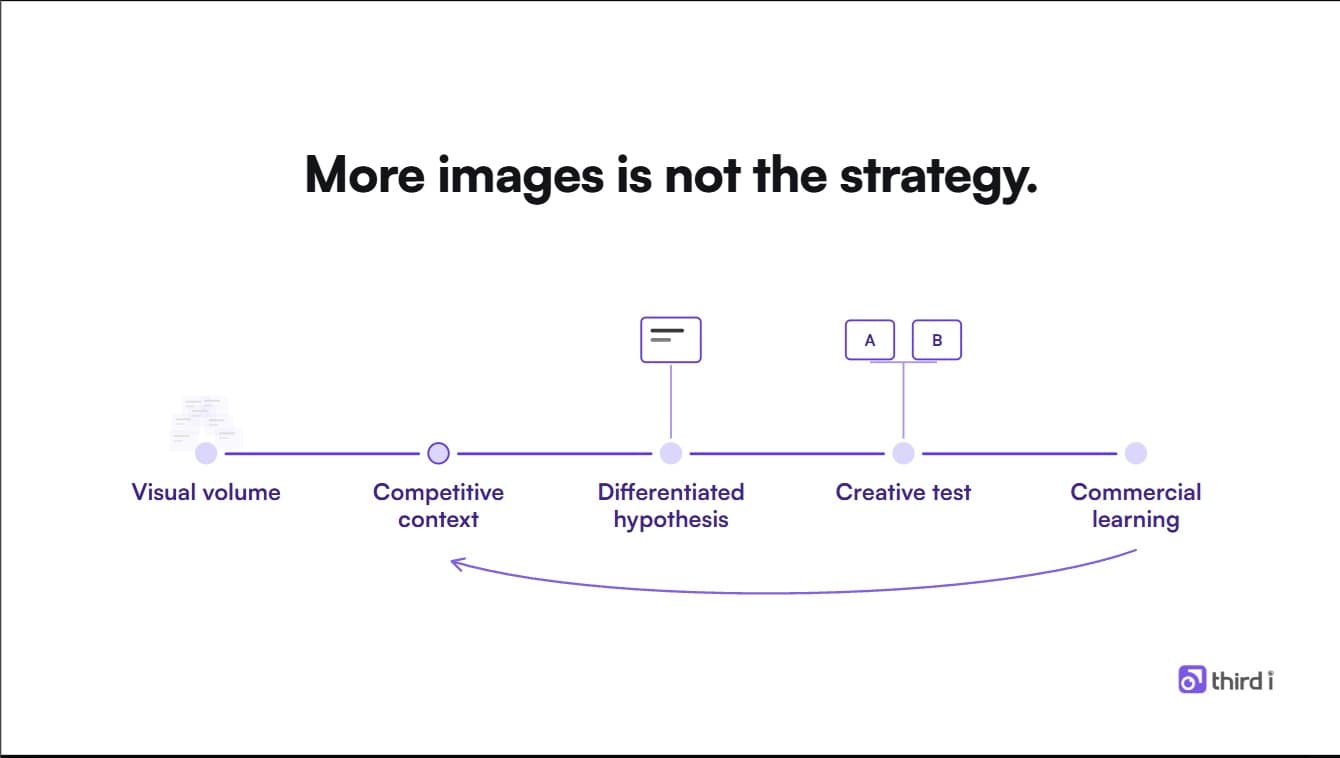
A larger asset library is not a creative strategy. It is just a larger asset library. This is the same operating problem we see when new AI models expand a team’s output capacity: more work does not automatically produce better marketing judgement. Our recent guide on model capability and connected marketing context makes that distinction in more detail.
The hard part is still deciding what deserves to exist next. That decision needs category context, business context and a real feedback loop after the creative goes live.
Why competitor research is now a creative discipline
If people encounter brands before they type a precise query, the competitive set expands. It is not only the brands you bid against or rank beside. It is every visual pattern teaching the customer what this category looks like: recurring claims, creator styles, product framing, offers, colours, formats and moments.
Most teams know this intuitively. The problem is how the work gets done. A strategist opens an ad library. Someone saves a few posts. A promising reference gets buried in Slack. By the time the team starts making the next asset, the market context is a pile of tabs rather than a shared point of view.
We have seen the value of bringing competitor research into a wider decision process before. In our work previously, an extensive audit, historical trends, competitor research and AI analysis exposed a gap in audience targeting; the resulting audience and creative work helped reduce cost per install by 40%.
That is why competitor research should not be treated as a once-a-quarter inspiration exercise. It is a creative discipline: observe the field, identify patterns, decide what to challenge and give the team a better starting point than instinct alone.
Turning competitor output into a better creative decision
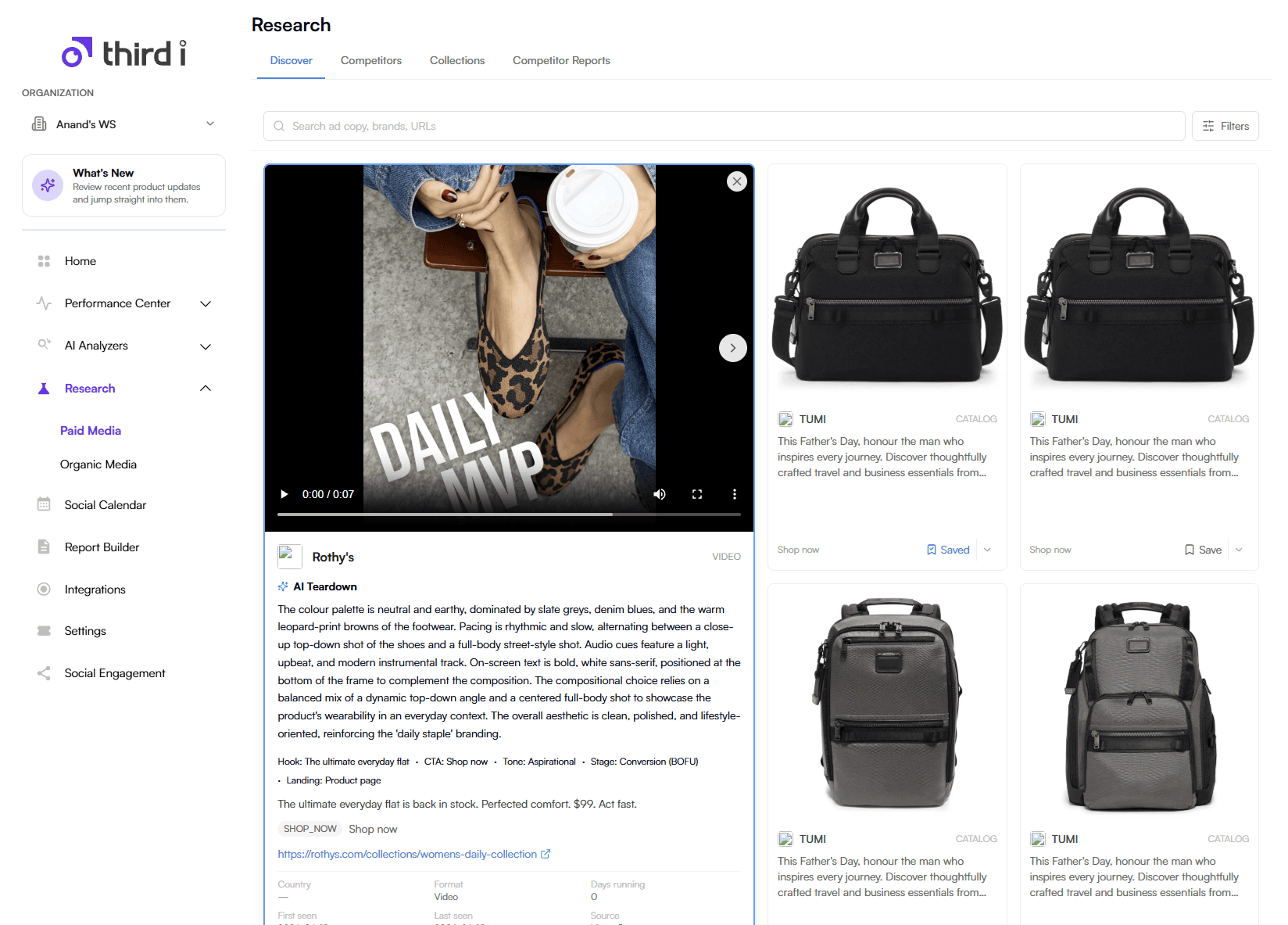
This is the problem behind our newly live Competitor Research capability in Third i. It brings public competitor Meta ads and Instagram organic posts into a working research layer, where teams can search, inspect and save the examples that matter, then organise them into collections they can return to as a category or campaign develops.
The objective is not to copy a competitor’s ad. It is to see the pattern clearly enough to make a better decision. What angles are overused? Which calls to action dominate? Is everyone optimising for the bottom of the funnel? Is there a visual or message territory the category has left open?
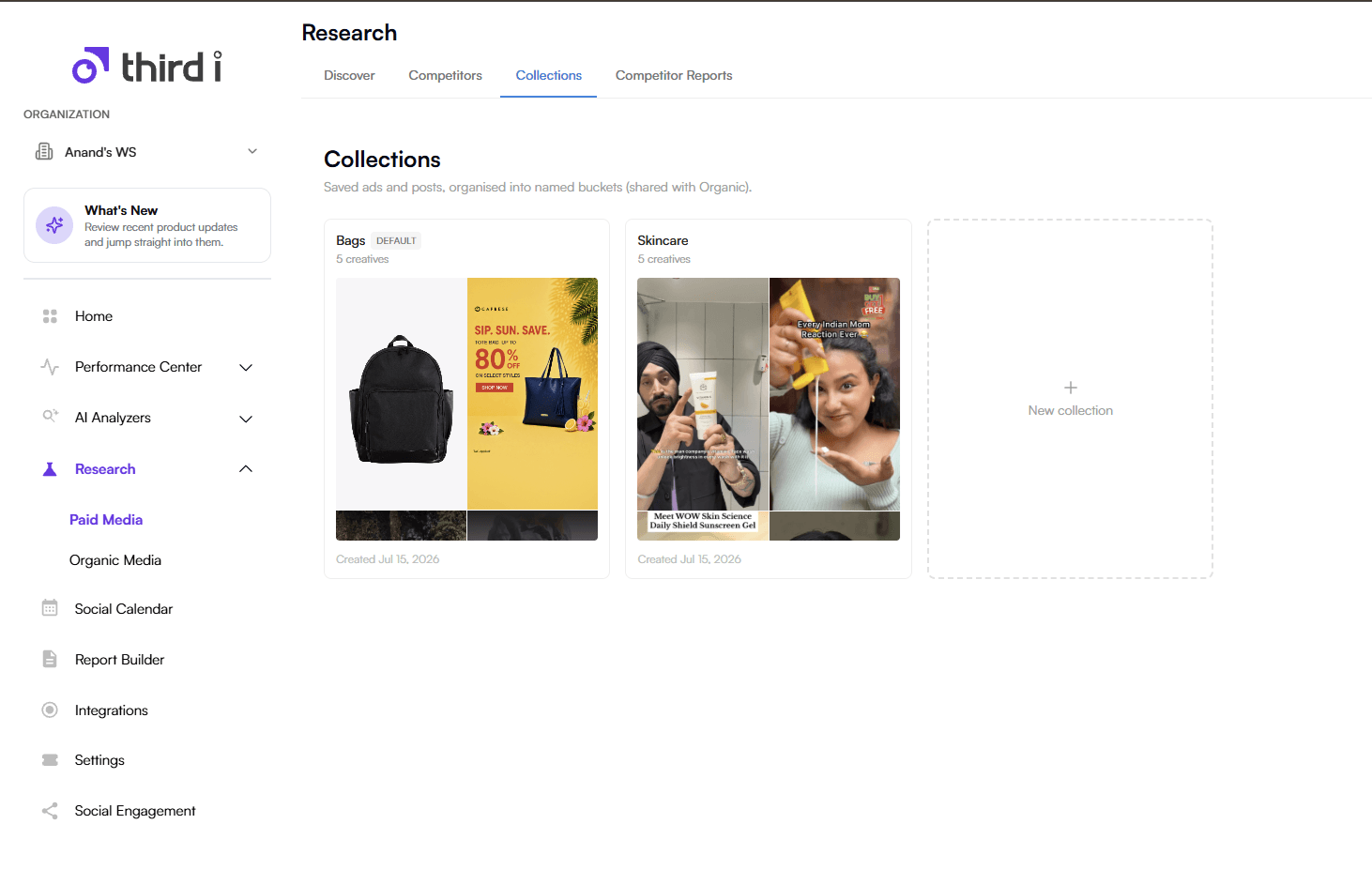
Third i classifies competitor creative by dimensions such as tone, funnel stage, CTA and format. That turns scattered examples into a practical question: what is the market teaching people to expect, and what should we do differently?
This complements the work after a creative is live. Our Creative Analyzer is designed to distinguish a weak ad from a problem further down the funnel, so teams do not kill useful creative for the wrong reason.
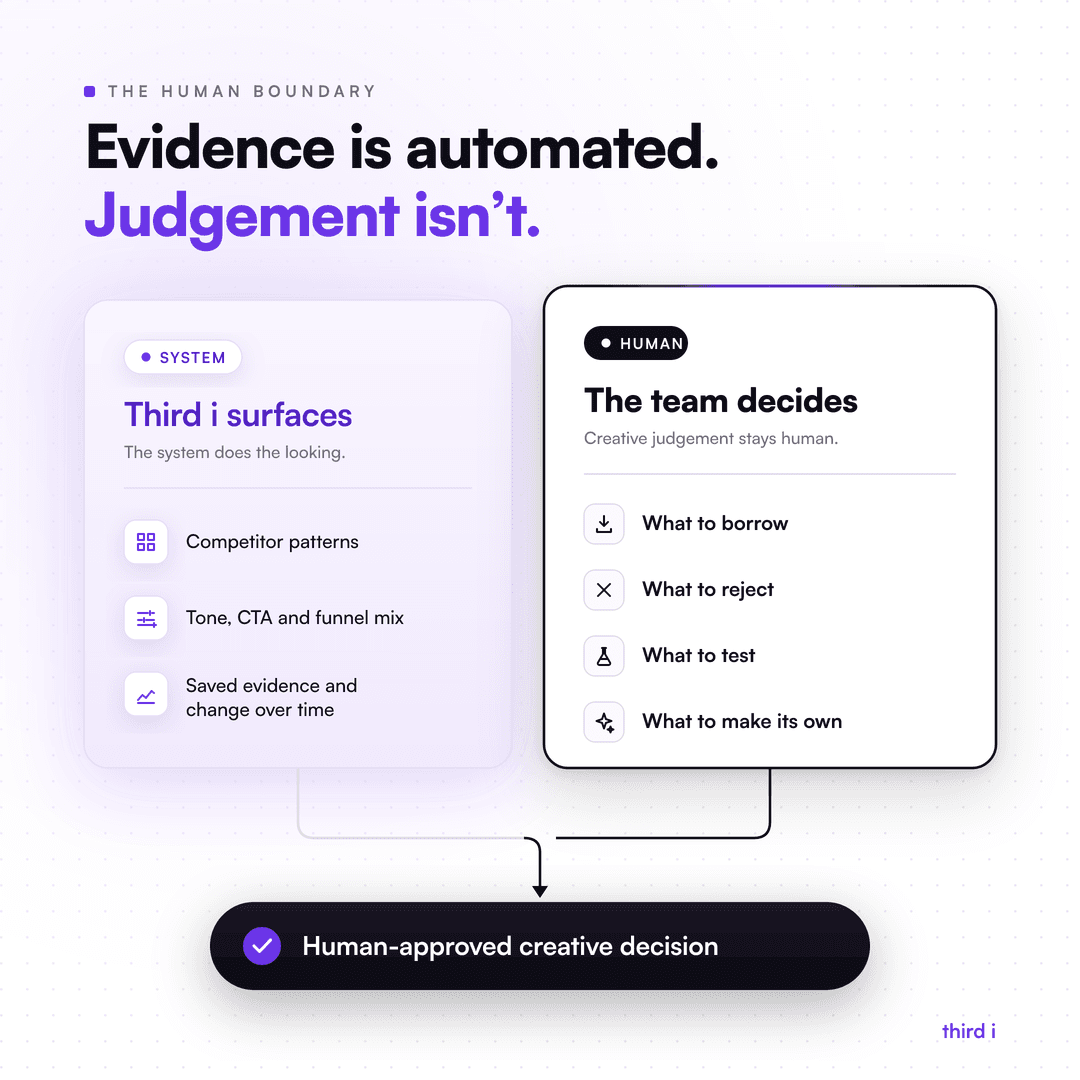
The system should surface the field. Humans still decide what is worth borrowing, rejecting, testing or making their own.
What teams should do next
Do not respond to this shift by commissioning a hundred more images. Build a better decision loop around the images you already have and the market you are entering.
1. Observe the category. Track the competitor creative, messages and offers that are actually appearing in market.
2. Identify the repeated patterns. Separate a real category convention from a one-off execution.
3. Organise the evidence. Save the examples behind a hypothesis so the reasoning is available to the full team.
4. Form a differentiated creative bet. Decide what to borrow, challenge or deliberately avoid.
5. Test and learn. Read creative response alongside the rest of the funnel before declaring an asset a winner or a failure.
The next creative advantage will not come from generating an image faster than everyone else. It will come from seeing the market more clearly before deciding what deserves to exist in it.
If your team is trying to turn competitor noise into a more useful creative point of view, book a Third i working session.
FAQ
Is Google Images’ new browseable homepage available globally?
No. Google says it is rolling out over coming weeks on desktop, in English, to signed-in users in the U.S. The article treats it as a direction-of-travel signal, not a claim about current worldwide availability.
Does easier image generation make a brand more discoverable?
Not by itself. Generation expands the supply of possible creative. Discoverability still depends on whether an image is relevant, distinctive and connected to a real audience, category and commercial objective.
What should a creative team research before making a new asset?
Start with the visual and message patterns already present in the market, then compare them against the audience, funnel stage, business objective and evidence from previous creative performance.
See this on your own accounts
third i connects to the platforms you already run and does this work against your live numbers.
Read more
View all articles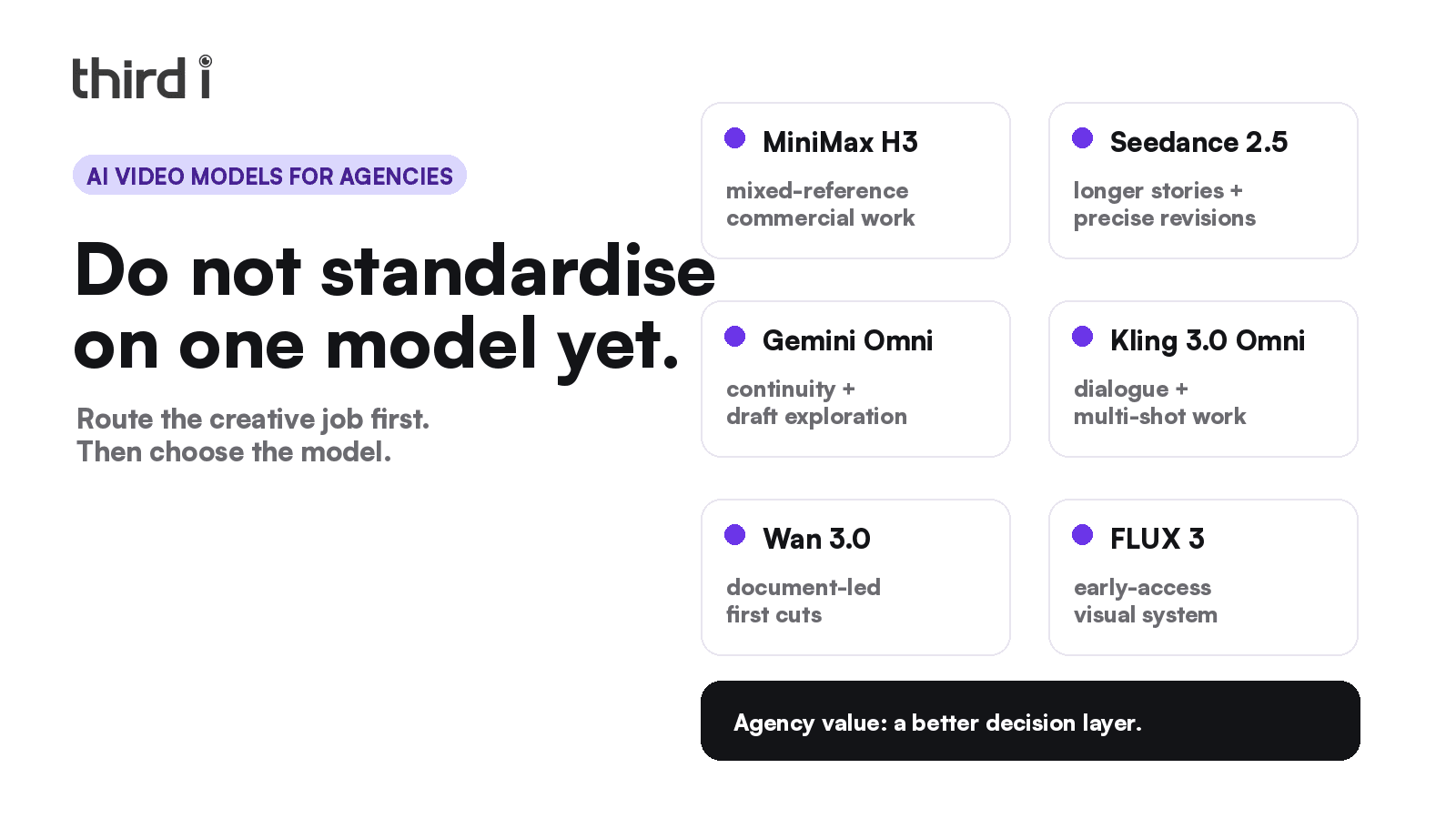
MiniMax H3 vs Seedance 2.5 vs Gemini Omni vs Kling vs Wan 3.0 vs FLUX 3 for Agencies
A practical guide for agencies comparing six leading AI video models by the production job, controls, review burden and client risk that actually matter.


Google Demand Gen Holiday Guide: Why Creator-Proof Creative Matters
Google’s July Demand Gen Drop is a cue for retail teams. Learn how to build creator-proof holiday creative systems that turn inspiration into action
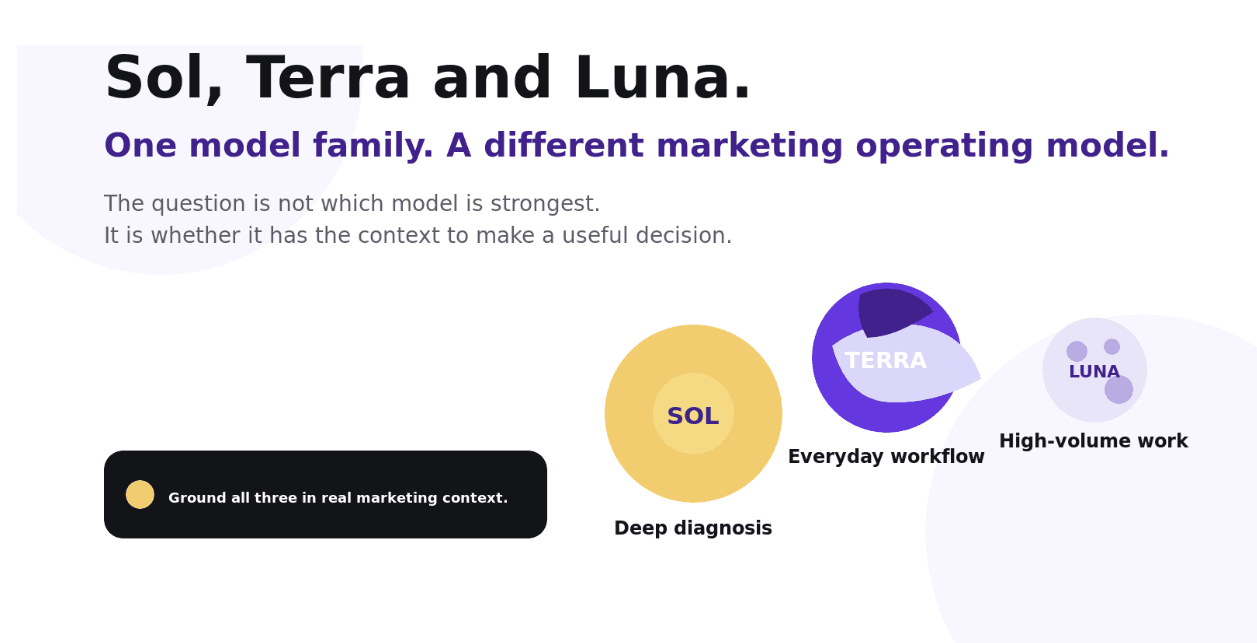
GPT-5.6 Sol vs Terra vs Luna for Marketing Teams and Agencies
A founder's practical guide to using GPT-5.6 Sol, Terra and Luna in marketing. Learn which model fits each job and why connected context matters more than raw capability.