
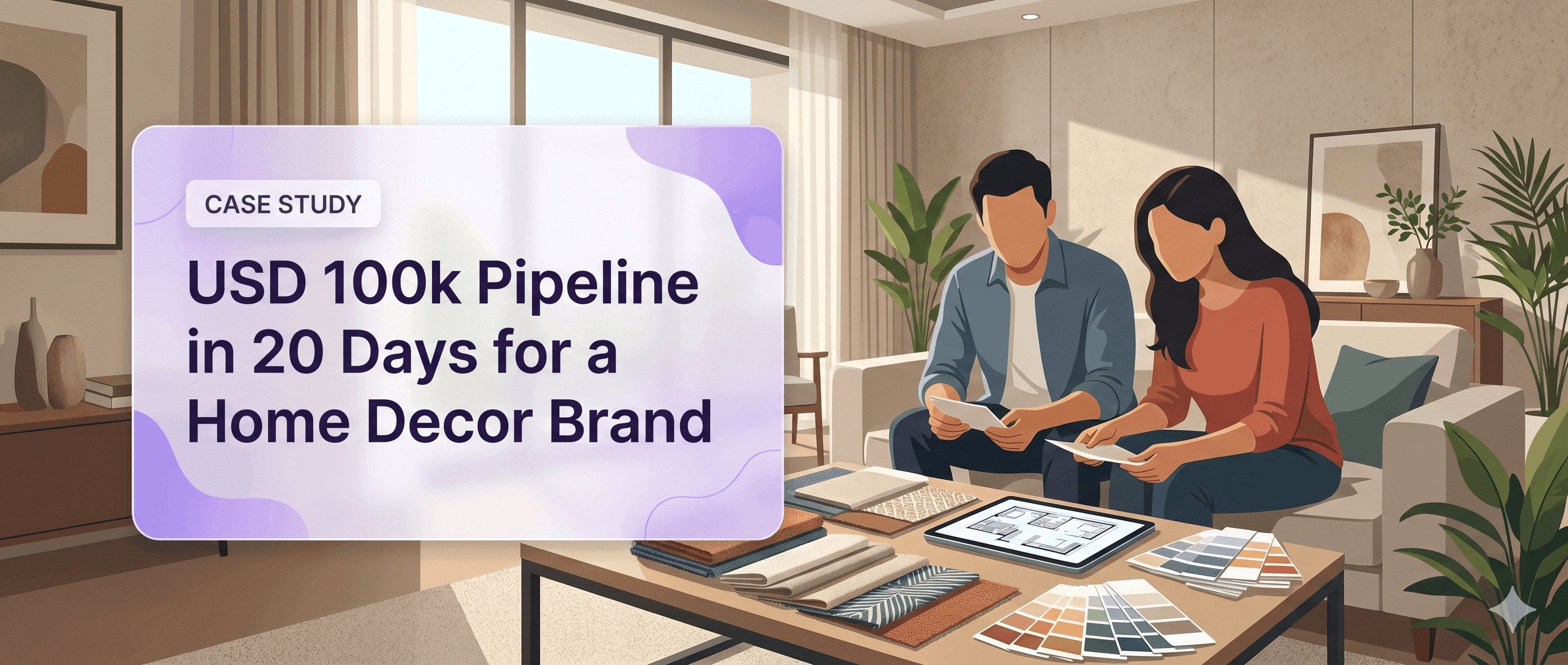
Home Decor Brand Builds USD 100k Pipeline In 20 Days With Google Ads
In just 20 days, third i helped them turn a modest Google Ads budget into a high-quality pipeline of interior projects worth over USD 100k, while keeping lead quality and ROAS at the center of the strategy.
Overview
An India-based home decor and interior design brand wanted more than clicks and leads. They wanted a predictable pipeline of high-intent projects that actually closed.
In just 20 days, third i helped them turn a modest Google Ads budget into a high-quality pipeline of interior projects worth over USD 100k, while keeping lead quality and ROAS at the center of the strategy.
Client
- Category: Home decor / interior design
- Market: South India
- Business model: High-ticket interior projects, home renovation, modular kitchens
- Objective: Build a strong, trackable pipeline of qualified leads for premium projects, not just increase form fills
The brand was already running some digital campaigns, but the sales team felt a gap between “leads in a sheet” and “projects in the pipeline.”
They partnered with third i to close that gap.
Challenge
The brand had three core problems that will sound familiar to most performance marketers in home services:
- Many leads, few serious buyers
Existing campaigns brought a mix of casual browsers, low-budget shoppers, and early-stage researchers, which drained sales time. - Rising cost per lead with weak visibility to revenue
The budget was spread across broad keywords and generic targeting, which raised CPL and blurred the view from click to actual project value. - No tight, end-to-end tracking
Calls and form fills were not consistently tied back to pipeline stages and closed deals, making it hard to know which campaigns were really working.
The question was clear:
How do you keep lead volume healthy while shifting the focus to pipeline and ROAS in less than a month?
Goals
With a 20-day window, third i and the client aligned on simple, hard targets:
- Generate a meaningful sales pipeline (target ~USD 100k+) from Google Ads in 20 days
- Maintain or improve lead quality compared to past campaigns
- Keep Cost Per Lead in a healthy range for a premium interior design brand
- Prove a clear link between keyword, campaign, and pipeline value, not just leads
Approach
third i’s team combined focused campaign restructuring with stricter tracking and an AI-backed feedback loop.
1. Simplified, intent-first account structure
Instead of a large, fragmented account, we moved to two tightly scoped campaigns:
- Campaign 1: High-intent search around interior design and home decor services in Bangalore
- Campaign 2: Brand, competitor, and key themed campaigns (e.g., modular kitchen, living room interiors)
Within these, ad groups were built around clear themes such as:
- “home interior designer Bangalore”
- “luxury home interiors”
- “modular kitchen design Bangalore”
- “living room interior design”
The goal: concentrate budget on search terms that signal someone is ready to talk to a designer, not just look at ideas.
2. Keyword strategy powered by real intent
We prioritized:
- Exact and phrase match keywords with strong intent, city-specific terms, and project-oriented phrases
- Carefully tested broad match where there was enough data to justify it
Then we actively trimmed waste:
- Added negatives for “free ideas,” “courses,” “jobs,” and DIY content
- Monitored search terms to cut out low-quality themes every few days
This stopped the budget from leaking into non-buying traffic and pushed spend into search terms more likely to convert into projects.
3. Lead quality by design, not by chance
To avoid flooding the sales team with weak leads, we redesigned how prospects were filtered:
- Ad copy called out city, consultation, and a clear next step (book a design consult)
- Landing pages asked for enough detail to qualify a lead: property type, area, and project timeline
- Messaging focused on serious renovation and interior projects, not impulse decor shopping
This meant fewer but better conversations for the sales team, and made it easier to connect ad spend to meaningful opportunities.
4. From click to pipeline: tracking that finally made sense
We connected three pieces together:
- Google Ads conversions for calls and form submissions
- Landing page analytics to track key actions
- A simple pipeline view that recorded opportunity size and status
Every week across the 20-day window, the combined team looked at:
- Leads by campaign and keyword
- Pipeline value by campaign and keyword
- Closed revenue by campaign and keyword
This gave a very clear picture: which keywords just created noise, and which ones created real pipeline and cash.
5. Always-on support from third i AI agents
While the initial setup was driven by the growth team, third i’s AI agents helped keep performance on track:
- Keyword Analyzer Agent
- Flagged wasteful search terms to add as negatives
- Highlighted keywords that consistently produced high-value leads
- Creative Analyzer Agent
- Spotted underperforming ad variants and creative fatigue
- Pointed to headlines and descriptions that attracted stronger leads
- Reporting Agent
- Pulled all of this into simple, digestible reports
- Removed the need to manually compile Google Ads, analytics, and pipeline data each week
This combination of human strategy plus AI watchtower made it possible to respond fast within the short campaign window.
Results
In just 20 days, the home decor brand saw a clear shift from “leads on a sheet” to a pipeline the sales team could actually work and close.
Key outcomes
- About USD 100k+ pipeline value created.
- Around USD 24k closed revenue in the first 20 days.
- 21x ROAS in the first 20 days
- 8.37 percent conversion rate, roughly 3x higher than typical Google Ads averages for many service categories
Related case studies
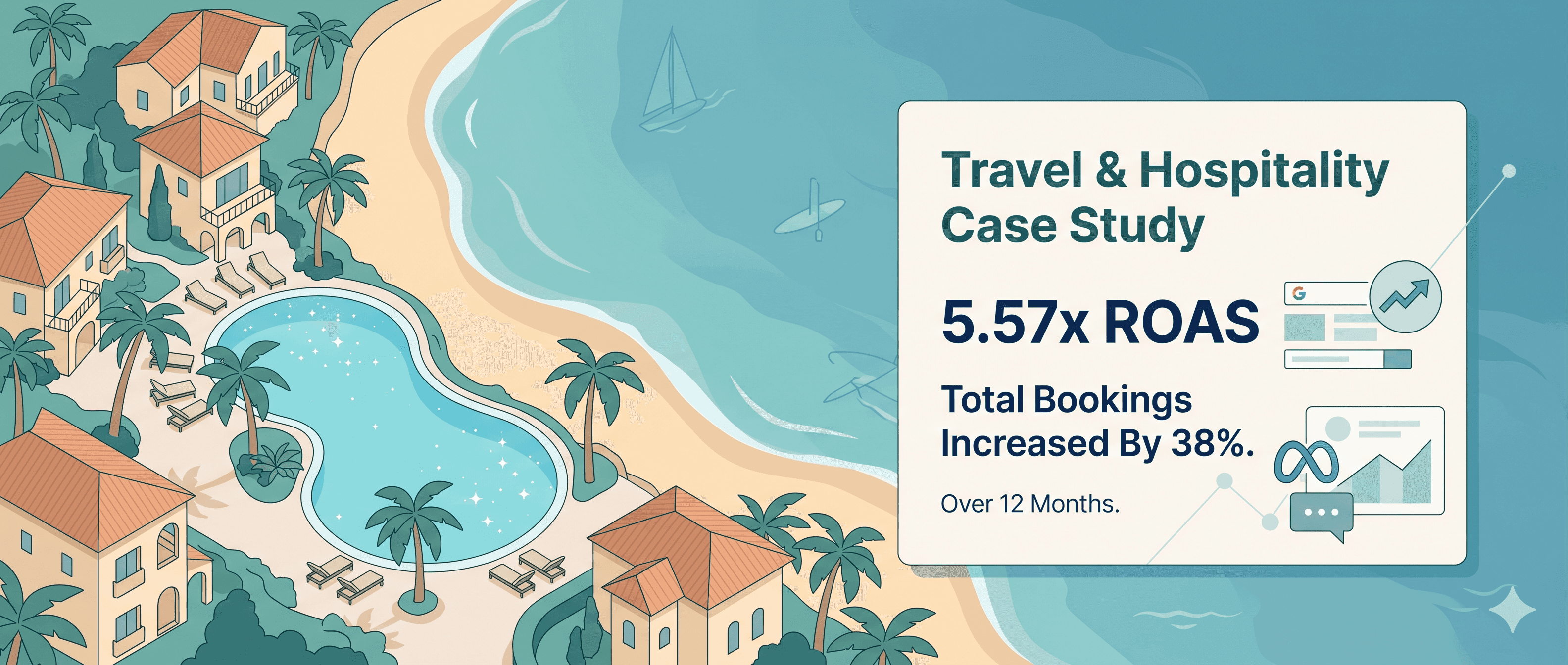
Travel And Hospitality Brand Drives 5.57x ROAS With Integrated Google And Meta Campaigns
A luxury travel and hospitality brand with 18 resorts across South India wanted to grow direct bookings and reduce OTA dependence. Over six months, third i helped them drive a 5.57x ROAS using a tightly tplanned Google and Meta strategy.
Sadhana Tablet Achieves 3.2x RoAS with premium Tablet Launch
Sadhana Tablet boosts RoAS by 3.2x with its premium tablet launch, showcasing the power of strategic ad spending and product positioning.
Leading Relocation Company achieves 1.5x Higher Leads with Performance Marketing
The relocation brand faced the challenge of insufficient lead volume for pet relocation.