
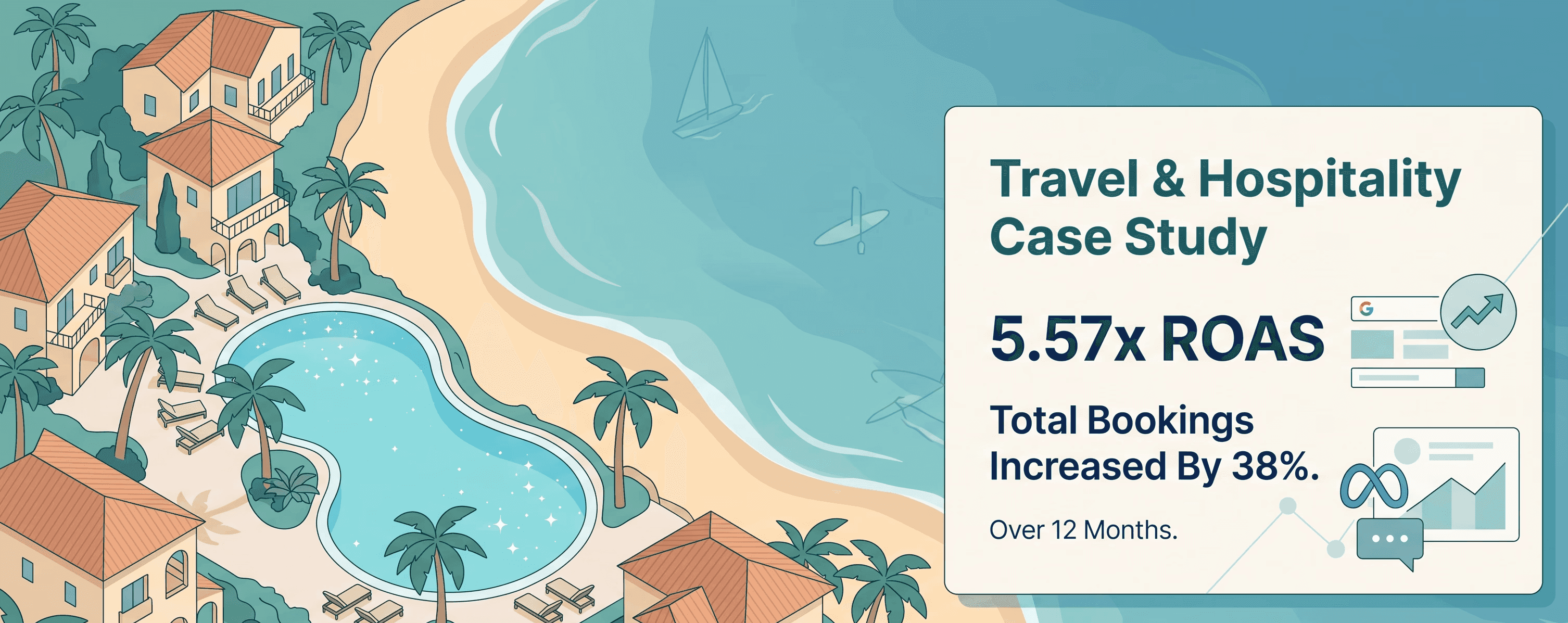
How A Luxury Resort Brand Drove 5.57x ROAS With Google And Meta
What will you learn from this case study?
This case study shows how a luxury resort group used Google Ads and Meta to generate over USD 200k in direct and offline revenue with a 5.57x ROAS in six months.
If you manage performance marketing for travel or hospitality, you will see how a multi-property brand can use an integrated media plan and better tracking to cut OTA reliance and lift direct bookings.
We will cover:
- The exact numbers behind the campaign
- How the Google and Meta account structures worked
- What changed in targeting, creative, and measurement
- How offline revenue was tracked back to digital
- Where third i’s AI agents fit in for agencies and in-house teams
Who is this case study for?
This story is for performance marketers and agencies working with:
- Resort chains
- Boutique hotels and eco-resorts
- Travel brands with multiple properties and a strong direct booking goal
If you care about ROAS, occupancy, and reducing OTA commissions, this case study is relevant.
What was the business context?
A luxury resort group with 18 properties across South India wanted to grow direct bookings while still playing in a crowded market with global chains and OTAs.
They partnered with third i to build an integrated Google and Meta strategy that could scale across all properties without losing each property’s identity.
Key facts:
- 18 unique properties across beach, backwater, heritage, and wildlife destinations
- Markets: South India
- Primary goal: more direct bookings and revenue via the website, with better visibility into ROI
- Campaign period: 6 months
What results did the campaigns achieve?
Over six months, the integrated strategy produced strong returns across online and offline revenue.
Headline numbers:
- ROAS: 5.57x
- ROI: 456 percent
- Online bookings: 1,012
For every ₹1 spent on ads, the brand generated ₹5.57 in revenue, while keeping most of that revenue on its own booking engine instead of handing commission to OTAs.
How did Google Ads contribute?
Google Ads carried most of the direct-response load and captured high-intent travel demand.
Google Ads setup:
- 27 active campaigns, covering:
- High-intent search for hotel and resort bookings
- Display for remarketing and awareness
- Performance Max campaigns for reach and discovery
- Location-specific campaigns for individual properties
Google Ads performance:
- Impressions: 1,730,244
- Clicks: 106,430
- CTR: 6.15 percent (vs hospitality averages often around 2-3 percent)
- Average CPC: ₹23.86
- Conversion rate: 0.90 percent (above typical hotel search benchmarks of ~0.5-0.8 percent)
Good to note for performance marketers: a 6.15 percent CTR in this segment suggests tight keyword and creative alignment, not broad generic ads.
How did Meta campaigns support the funnel?
Meta (Facebook and Instagram) added reach, intent capture, and lead generation to support the sales team and remarketing flows.
Meta setup:
- 23 active campaigns, including:
- Lead generation campaigns with forms
- Video campaigns showcasing resort experiences
- Carousel ads to highlight multiple properties
- Awareness campaigns for the brand and specific destinations
Meta performance:
- Reach: 2,735,696 unique users
- Average frequency: 3.59
- CPM: ₹128.48
What were the main challenges?
The brand faced the same problems many travel and hospitality marketers will recognise:
- Diverse property portfolio
18 distinct properties, each with its own story, target audience, and price point. - Heavy competition
Competing with both OTAs and large international chains for the same demand. - OTA dependency
Third-party channels ate into margins and limited control over the customer relationship. - Attribution complexity
Some bookings happened online, some over phone, and some via long sales cycles for groups or weddings.
The campaign had to give each property enough visibility while keeping messaging coherent and the numbers trackable.
What strategy made the difference?
The success came from bringing structure and intent into a complex setup, then layering AI and data on top.
Key moves:
- Multi-layer campaigns
- Search: capture high-intent “book resort”, “beach resort”, “backwater stay” queries.
- Display and Video: introduce the brand and destinations to wider audiences.
- Performance Max: expand reach and pick up incremental conversions.
- Property-level focus
- Location and theme-specific campaigns for priority properties.
- Creatives that actually show the beach, backwater, heritage or forest setting in each ad.
- Direct booking push
- Clear CTAs to book directly on the website.
- Offers that made direct booking more attractive than OTAs (better packages or inclusions).
- Integrated measurement
- Use booking engine and analytics data to map which campaigns drive bookings and revenue.
- Track offline enquiries and assign them to campaigns as best as possible.
Where do third i AI agents plug in?
For a multi-property travel brand, constant manual monitoring across 50+ campaigns is not realistic.
This is where third i’s AI agents help performance marketers.
- Keyword and Budget agents
- Scan search terms and placements across 27+ Google campaigns.
- Flag wasteful keywords and audiences, recommend shifts towards high-performing segments.
- Creative and Experiment agents
- Watch how different pictures and video creatives perform across Meta and Google.
- Suggest which angles (beach, backwater, wellness, heritage) drive better engagement and bookings.
- Reporting agent
- Pulls Google Ads, Meta, and booking engine data into clean summaries.
- Helps you see which properties and campaigns drive most revenue without opening 10 tabs.
This lets agencies and in-house teams spend more time crafting offers and guest experiences, and less time downloading CSVs.
What can other travel and hospitality brands learn?
If you manage performance for resorts, hotels, or travel brands, a few clear lessons emerge:
- Treat Google and Meta as one system, not separate tactics
- Invest in property-level storytelling and campaigns where it matters most
- Track revenue across online engine and offline conversions
- Use AI agents to watch performance at scale so you do not miss shifts in demand
The result is not just more traffic, but a measurable impact on revenue, ROAS, and OTA dependence.
CTA
If you want similar visibility and results for your travel or hospitality brand, you can connect your Google and Meta accounts to third i and see where your current spend is leaking.
Try third i’s free trial or book a walkthrough with our team to see how AI agents can support your next season.
See this on your own accounts
third i connects to the platforms you already run and does this work against your live numbers.
Read more
View all articles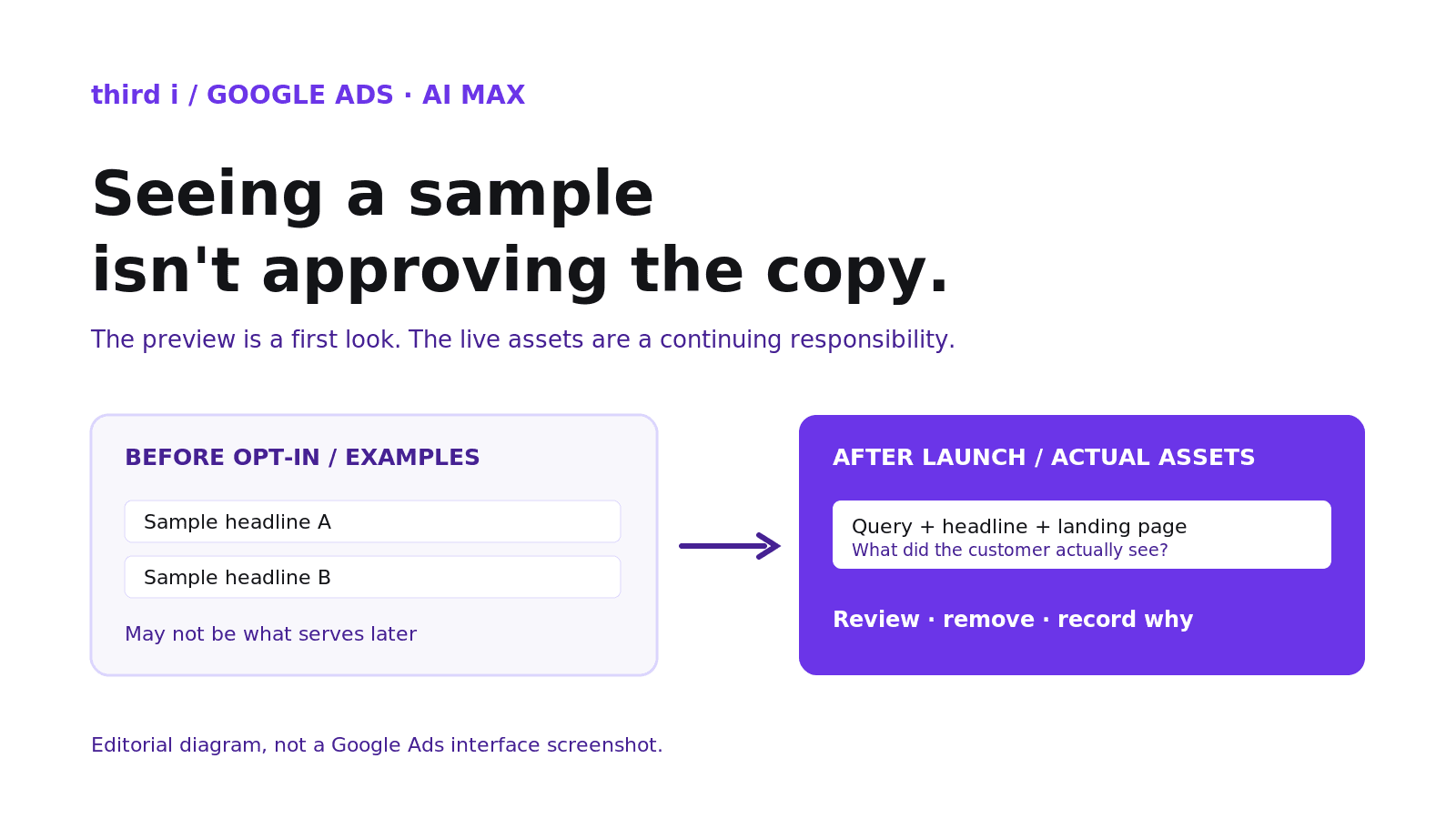
AI Max Copy Preview: Seeing a Sample Isn't Approving It
Google Ads now shows sample AI Max headlines before opt-in. Here is why previewing examples is useful, but does not replace reviewing the copy that actually serves.

How to Defend a 2027 Marketing Budget When the Numbers Disagree
Google, GA4 and the CRM disagree. What should an agency put in a 2027 marketing budget? An account review shows why the answer is not another dashboard.
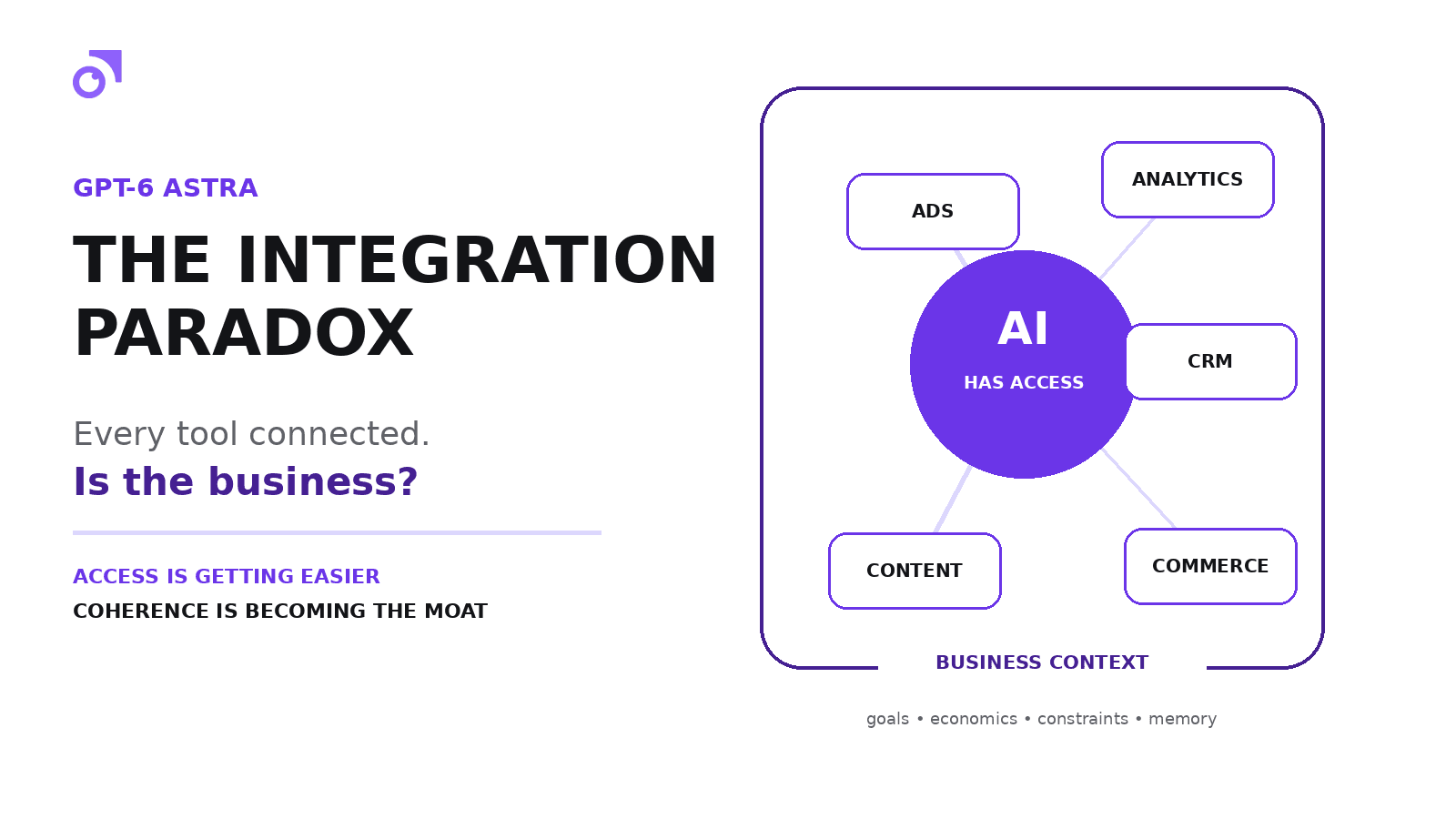
GPT-6 Astra and the Integration Paradox: When AI Can Use Every Tool, Business Context Becomes the Moat
GPT-6 Astra can operate more software, but useful marketing still depends on connected goals, economics, constraints, decision history and human approval.