
How A Home Decor Brand Generated USD 100k Pipeline In 20 Days With Google Ads

What will you learn from this case study?
You will see how a Bangalore-based home decor and interior design brand built a USD 100k sales pipeline in 20 days using focused Google Ads, and how AI agents can help you repeat this at scale.
If you run performance marketing for brands or agencies, this breakdown gives you a playbook you can adapt, not just a vanity win to admire.
We will cover:
- The exact numbers behind the campaign
- How the Google Ads account was structured
- What changed in targeting, keywords, and creatives
- How we tracked all the way to pipeline and revenue
- Where third i’s AI agents plug in so you are not relying on one “hero” media buyer
Who is this case study for?
This story is for performance marketers at home decor, interior design, and premium home services brands, as well as agencies who manage these accounts.
If you care about lead quality, ROAS, and real pipeline created, this is for you.
Typical roles that will find this useful:
- Performance marketing managers handling Google Ads for local service brands
- Agency founders and media leads who manage multiple home decor or home services clients
- Founders or growth leaders at interior design studios who want predictable lead flow
What was the goal for this home decor brand?
The brand wanted to move from scattered enquiries to a consistent pipeline of high-intent leads for premium interior projects in Bangalore.
They were less interested in cheap leads and more focused on qualified prospects with serious budgets and near-term project timelines.
In plain terms:
- Fewer junk calls from “just browsing” users
- More conversations with people ready to start a project
- Clear visibility from ad spend to pipeline and revenue
What results did the Google Ads campaign achieve in 20 days?
In 20 days, the campaign created a strong, trackable pipeline while keeping costs under control.
Numbers below are derived from the original INR data and converted to USD for this case study.
- 38 qualified leads
- About USD 100k+ in pipeline value created.
- Around USD 24k closed in the first 20 days.
- 8.37 percent conversion rate, roughly 3x higher than typical Google Ads averages around 2–7 percent depending on industry
- Cost per lead is around USD 30.
For context, many home services advertisers average conversion rates between 7–10 percent and often see higher CPAs.
This campaign hit strong efficiency while focusing on premium leads, not just volume.
What challenges do home decor brands face with Google Ads?
Most home decor and interior design brands deal with a similar problem set in search: too many low-intent clicks and not enough revenue.
The usual pattern looks like this:
- Broad keywords bring in a mix of researchers, students, and price shoppers
- Generic ad copy attracts people without clear budgets or timelines
- Calls and form fills are not tracked properly to deals and revenue
- Media teams optimize for cheap leads instead of strong pipeline
In this case, the brand was seeing leads come in, but the sales team did not feel the impact in their pipeline.
The brief to the performance team was clear: keep volume decent, but fix quality and revenue attribution.
How was the Google Ads account structured?
The account was kept lean on purpose, with two main campaigns instead of a big messy setup.
This helped focus the budget, simplify optimization, and make it easier to spot what was working.
At a high level:
- Campaign 1: High-intent interior design and home decor search terms
- Campaign 2: Brand and competitor campaigns, plus some targeted themes around key rooms or project types
Each campaign was broken into focused ad groups around themes like:
- “home interior designer Bangalore”
- “modular kitchen design”
- “living room interiors”
- “luxury home interiors”
Match types leaned towards exact and phrase for the highest intent terms, with some carefully managed broad match where data supported it.
This mix allowed the brand to capture strong intent while still discovering new search terms that converted.
Which keywords actually drove the pipeline, not just leads?
The winning pattern was simple: narrow down to people clearly looking for interior design services in a specific city, then filter them further with ad copy and landing pages.
The high-performing terms had three traits:
- Clear service intent: “interior designer,” “home interiors,” “kitchen remodel,” “modular kitchen design”
- Location signals: “Bangalore,” “near me,” or neighborhood clusters
- Project mindset: queries that imply active planning, not casual browsing
Negative keywords played a big role.
Terms related to free design ideas, courses, jobs, DIY content, or purely decor items without service intent were aggressively filtered out.
For performance marketers, the lesson is direct:
- Start with the top 10–20 highest intent terms
- Add negatives weekly based on search term reports
- Watch which terms show up in closed deals and pipeline, not only in form fills
How did we improve lead quality without killing volume?
The core of this campaign was not chasing the cheapest leads.
The focus was to keep CPL at a healthy level while pushing up the percentage of leads that turned into qualified opportunities and revenue.
Key tactics:
- Fitted ad copy to mention project scale and city clearly, so casual users filtered themselves out
- Used strong CTAs around “book a design consultation” instead of “learn more”
- Built landing pages that asked for details like house type, area size, and timeline to help sales qualify faster
Once calls and form submissions were linked back to a CRM or pipeline tracker, it became clear which keywords produced deals, not just leads.
From there, budget was shifted toward those segments, and bids were reduced on segments that looked good at the lead level but did not show up in revenue.
How was performance tracked from click to revenue?
A big part of this result came from tightening tracking, not only changing bids.
The team connected:
- Google Ads conversions for calls and forms
- Landing page tracking for key actions
- Simple CRM or pipeline tracking for opportunities and closed deals
Every week, they looked at:
- Leads by campaign and keyword
- Pipeline value by campaign and keyword
- Revenue closed by campaign and keyword
That made optimization decisions much easier and less emotional.
How would third i AI agents support a campaign like this?
Now let’s shift from “one good campaign” to “how do you make this repeatable for multiple clients and brands.”
This is where third i’s AI agents come in.
third i connects to Google Ads, Meta, GA4, and other platforms, then uses specialized agents to watch performance and recommend or take actions.
In a case like this, here is how the agents would help:
Keyword Analyzer Agent: cut waste and find winners
This agent scans search term data, identifies wasteful keywords, and flags best-performing ones by CPL, conversion rate, and ROAS.
In our home decor campaign, it would:
- Spot “free decor ideas,” “course,” or “jobs” terms and suggest them as negatives
- Identify high-value search terms that most often end in pipeline or revenue
- Suggest bid increases for profitable keywords and reductions for weak ones
Instead of manually combing through search term reports for hours, the media buyer gets a clear list of actions daily.
Creative Analyzer Agent: protect winning ads and fix weak ones
third i’s Creative Analyzer watches ad performance and surfaces underperforming ads and combinations.
For this campaign, that might mean:
- Flagging headlines that attract clicks but poor leads
- Identifying creative angles that bring more qualified consultations
- Suggesting new variations based on top performers
This helps teams avoid “set and forget” ad setups and keeps creative aligned with high-intent searches.
Reporting Agent: stop living inside spreadsheets
The Reporting Agent turns scattered data into simple, recurring insights.
Instead of building a fresh deck every week, the team can:
- Get daily or weekly summaries of CPL, pipeline, and ROAS
- See which campaigns contribute most to revenue, not just clicks
- Share clean reports with brand or agency stakeholders
For an agency running home decor, solar, and other local service accounts, this becomes a big time saver.
How can performance marketers replicate this for their own brands or clients?
If you run performance for a home decor or interior design brand, you can follow a similar structure.
At a simple level, the steps look like this:
- Define success in pipeline and revenue, not just leads
- Build a focused campaign structure around high-intent keywords and one city at a time
- Use ad copy and landing pages to filter for serious buyers
- Track conversions into a CRM and connect them to Google Ads
- Use an AI layer like third i to watch keywords, creatives, and reports daily
When you repeat this pattern across accounts, you get away from random experiments and move toward a clear system.
How should you structure your own Google Ads campaigns for interior design?
Here is a simple blueprint you can apply or adapt:
- Campaign A: “Interior Design Services – City Name”
- Ad Group 1: “home interior designer city” keywords
- Ad Group 2: “modular kitchen design city” keywords
- Ad Group 3: “living room interior design city” keywords
- Campaign B: “Brand + Competitor”
- Ad Group 1: brand name variations
- Ad Group 2: key competitors or “alternative to [competitor]”
Use strong negative keyword lists from day one and review them weekly.
Then layer in third i’s Keyword Analyzer and Creative Analyzer so you are not doing all the pattern-spotting by hand.
Make sure this piece internally links to:
- “link to our guide on AI-driven ad copy”
- “link to our case study on ROAS improvement”
- “link to our guide on Google Ads account structure for service brands”
These internal links will help both SEO and LLMs understand your content network.
How can AI automation change your day-to-day life as a performance marketer?
Agentic AI is shifting marketing automation from “nice dashboards” to “a feed of actions you can take today.”
For performance marketers, that means:
- Less time pulling reports and more time talking to clients and sales teams
- Fewer missed signals when a campaign starts wasting money
- Faster response when a keyword or creative suddenly spikes or drops
third i is built to serve agencies and marketing teams who run Google Ads, Meta, and more for multiple brands at once.
Instead of logging into six dashboards, you get one action list that tells you what to fix first.
Ready to test this on your home decor or interior design campaigns?
If you want to build your own “USD 100k pipeline in 20 days” story, you do not need to start from scratch.
You can plug your Google and Meta accounts into third i, let the agents read your data, and get your first batch of recommendations within minutes.
Try third i’s free 7-day trial and see which keywords, creatives, and campaigns are quietly holding back your ROAS right now.Then apply the same structure and tracking discipline from this case study to your own home decor or interior design accounts
See this on your own accounts
third i connects to the platforms you already run and does this work against your live numbers.
Read more
View all articles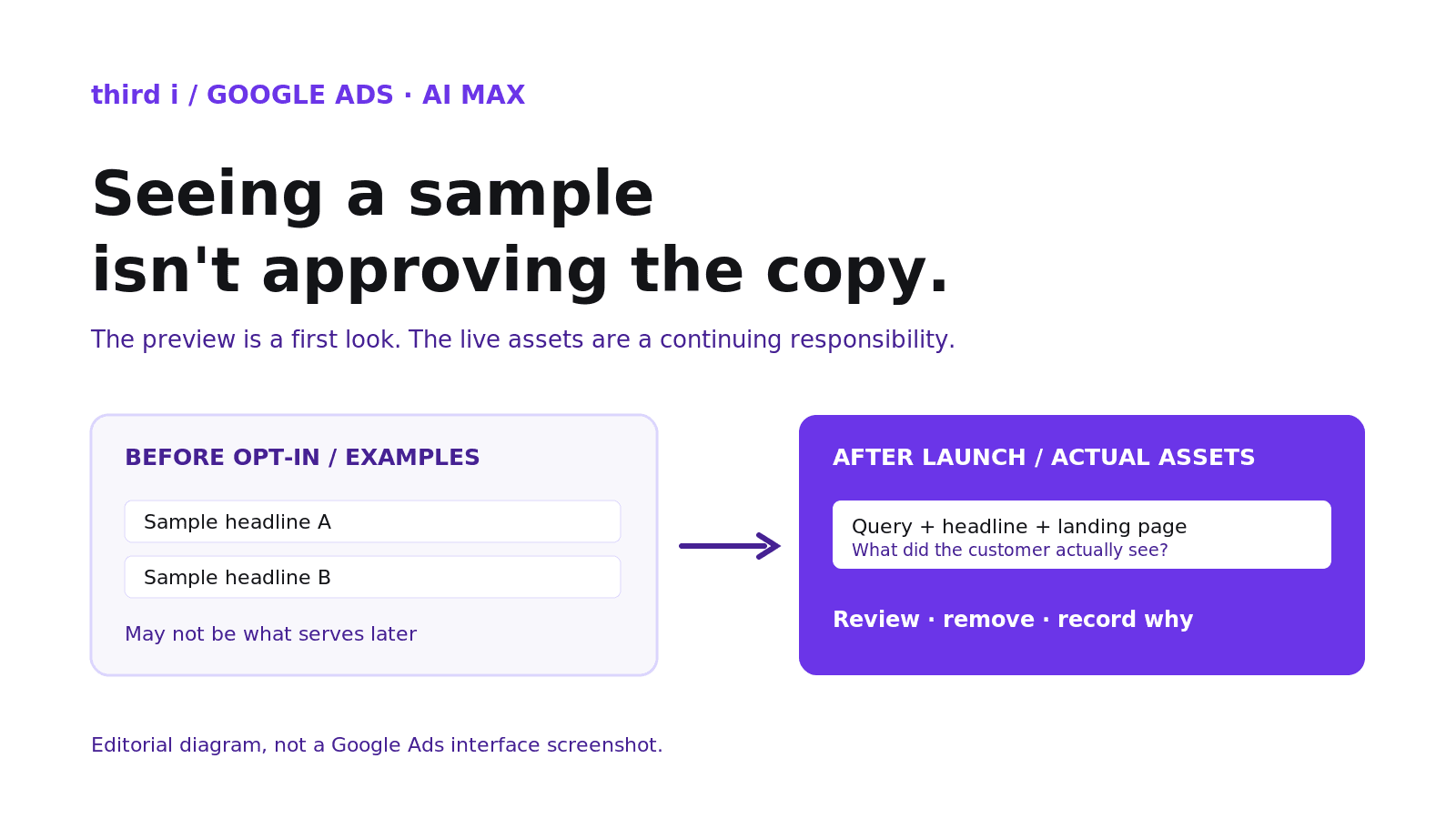
AI Max Copy Preview: Seeing a Sample Isn't Approving It
Google Ads now shows sample AI Max headlines before opt-in. Here is why previewing examples is useful, but does not replace reviewing the copy that actually serves.

How to Defend a 2027 Marketing Budget When the Numbers Disagree
Google, GA4 and the CRM disagree. What should an agency put in a 2027 marketing budget? An account review shows why the answer is not another dashboard.
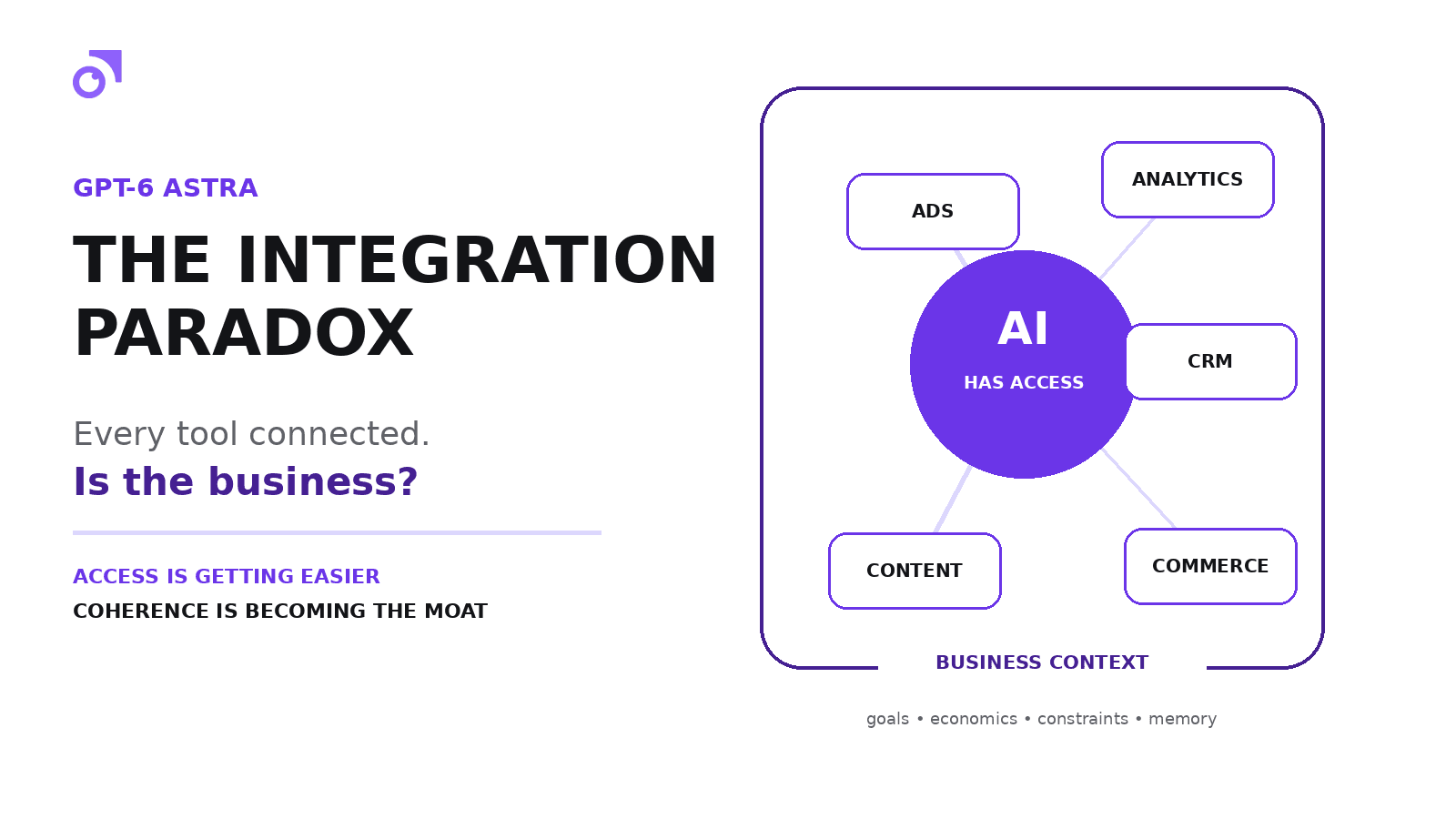
GPT-6 Astra and the Integration Paradox: When AI Can Use Every Tool, Business Context Becomes the Moat
GPT-6 Astra can operate more software, but useful marketing still depends on connected goals, economics, constraints, decision history and human approval.