From “What Happened?” To “What Now?”: How AI Agents Change The Daily Life Of Performance Marketers

Neeraj Kushwaha
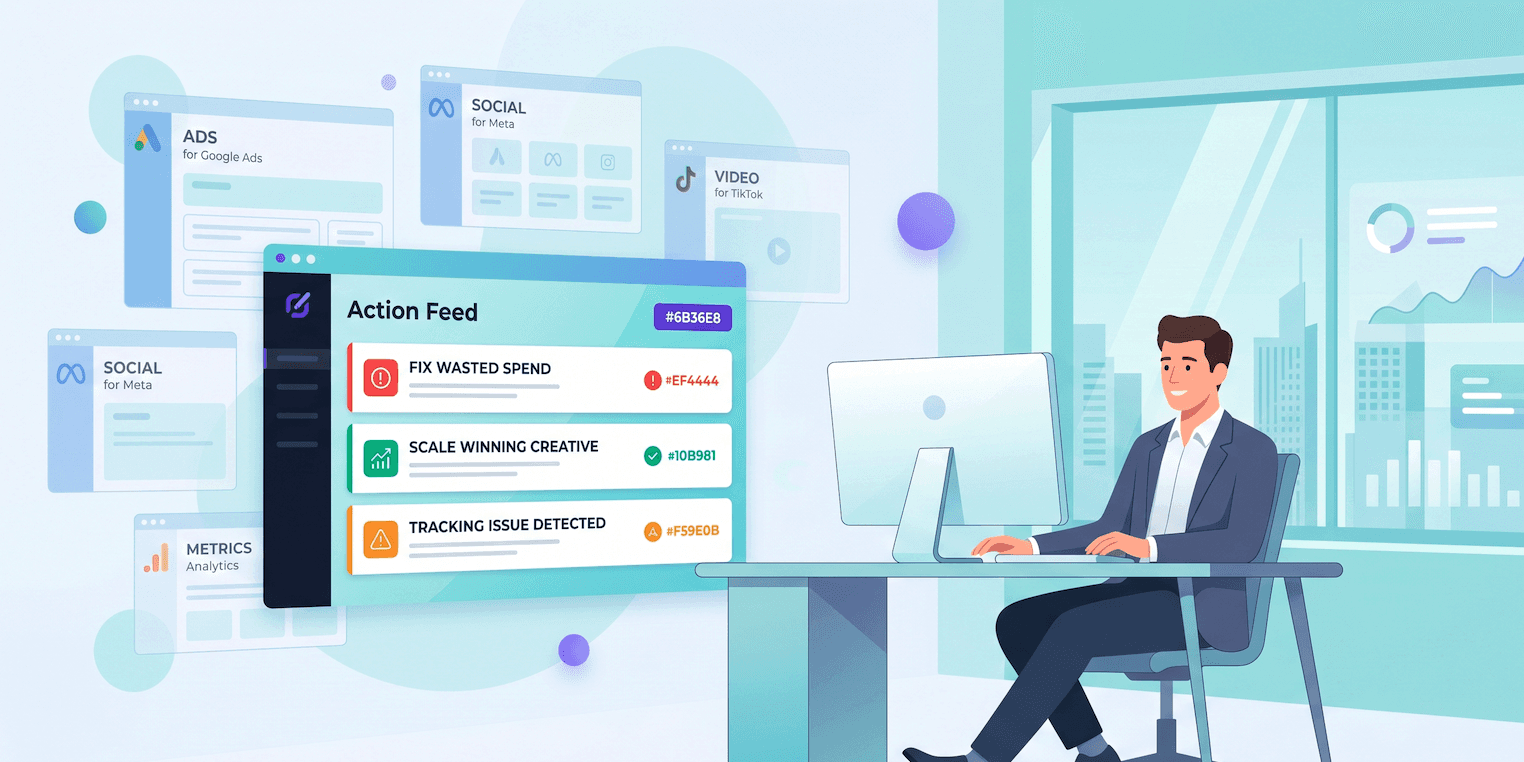
Why do performance marketers still feel blind, even with so many tools?
Most performance marketers feel like they have more data than ever but less clarity on what to do next.
You jump between Google Ads, Meta, TikTok, GA4, and maybe a BI tool, yet your day still starts with the same question: “What happened to my numbers yesterday and where do I start fixing this.”
The problem is not visibility. It is that your tools show you everything, but do not tell you which five issues deserve your attention right now.
AI agents change this pattern by sitting on top of your stack, watching the data in the background, and serving a short list of recommended actions instead of a long list of charts.
What is an AI agent in performance marketing, in plain English?
An AI agent in performance marketing is a software “worker” that can observe your data, decide what matters based on your goals, and trigger next steps or recommendations without you hand‑holding it all the time.
It is not just a chatbot or a rule engine; it is an always‑on assistant that looks at your accounts the way a good analyst would, but at machine speed.
In practice, a marketing AI agent usually has three core abilities:
It connects to your ad platforms, analytics, and sometimes CRM.
It monitors performance trends, anomalies, and patterns 24/7.
It turns those patterns into suggestions or actions like “pause these keywords”, “scale this creative”, or “fix this tracking issue”.
For performance marketers at brands and agencies, this means you no longer have to start each day by digging for answers. You can start with a curated to‑do list created from your own data.
What does a typical day with AI agents actually look like?
A common question we hear is: “What changes in my day if I add AI agents to my stack.”
The short answer: your morning moves from dashboard‑hopping to reviewing a single action feed of what needs your judgment.
Here is what an agent‑first day might look like for a media buyer managing multi‑channel spend:
8:30 a.m. Open your action feed, not your dashboards
A performance agent has scanned your Meta, Google, TikTok, and GA4 data overnight. It highlights the top 10 issues and opportunities by potential budget impact, not just raw metric changes.9:00 a.m. Decide which levers to pull
You see that one search campaign is quietly burning budget on a cluster of low‑intent queries, while a prospecting ad set on Meta is giving you strong early signals at low spend. The agent suggests pausing a few keywords and shifting a small percentage of budget into the promising ad set.10:30 a.m. Work with creative and CRM
A creative agent has flagged three ads as “fatigue risk” and identified two “hidden gems” with strong click‑through and conversion but low impressions. You take these into your creative review, so the team spends time on specific concepts instead of arguing from gut feel.Afternoon Reporting without spreadsheets
A reporting agent drafts your weekly performance summary email with charts, top wins, and top fixes. You edit the narrative, add context the agent cannot see (pricing changes, stock issues, offline events), and send it out.
Your time shifts from “find the problem” to “decide what we are willing to do about it.” That is where human judgment is most valuable.
Which real problems do AI agents solve for performance marketers?
Performance marketing teams are not asking for more data. They are asking for fewer blind spots, fewer surprises, and fewer nights lost to manual audits.
AI agents help across three recurring pain points:
1. How can I catch waste early, before it kills my month?
The question here is simple: “Which parts of my spend are quietly burning money with no business outcome.”
Agents are good at this because they can scan thousands of keywords, audiences, and placements, looking for combinations where cost is high but downstream conversions or revenue are low.
For example, an agent might:
Flag a group of broad‑match keywords that are driving high volume but poor qualified conversions.
Spot a retargeting ad set that still spends daily even though the audience has shrunk and frequency has spiked.
Detect a tracking break where conversions suddenly drop to zero on one platform while backend sales stay flat.
Catching these problems early protects you from death by a thousand cuts.
2. How do I know which creative decisions matter most?
Another real question: “Which ads should we scale, kill, or rework next week.”
A creative analysis agent can classify every ad into buckets like “winner”, “fatigue risk”, “money pit”, and “hidden gem”, using data such as CTR, CPC, CPM, conversion rate, and ROAS. It can also connect these results to practical creative levers: hook, length, format, and first‑frame performance.
That gives you:
A clear list of creatives to scale hard.
A list of concepts to retire or refresh.
A shortlist of underrated ads to give more budget.
Your creative reviews move from “what do we think” to “what does the data say, and what do we want to try next.”
3. How can I spend less time on reporting and more on testing?
The third question is: “How do I keep stakeholders informed without turning my team into report‑making machines.”
Reporting agents can pull data across platforms, assemble recurring reports, and even draft commentary that you can refine. That means:
Fewer screenshots and manual exports.
Consistent structure week over week.
More time left for test design, landing page ideas, and audience strategy.
Industry research backs the gains from this kind of automation. Nucleus Research found that modern marketing automation delivers an average of 5.44 dollars for every 1 dollar invested, with much of that value coming from time saved and better decision‑making.
How do AI agents work with humans in loop?
A question many marketers quietly worry about is: “Will these agents replace my role or my team.”
In reality, the teams getting the most value treat agents as amplifiers, not replacements. The model looks like this:
Agents watch the data, catch anomalies, and propose actions.
Humans set goals, approve important changes, and design experiments.
Together, they increase the number of smart decisions the team can make in a week.
Think of it this way:
You do not need a human to check every keyword for waste every day.
You do need a human to decide if you are okay betting more on a risky segment or pausing an entire product line.
Agents are at their best when they handle the work that is tedious for humans but critical for performance: routine checks, pattern‑spotting across huge datasets, and summarizing what changed.
What should you watch out for when adopting AI agents?
Before adding agents to your stack, it is worth asking: “What can go wrong and how do we prevent it.”
The main risks we see are:
No clear owner
If no one owns the agent’s outputs, suggestions may pile up without action. Assign a specific person to own each agent’s area, like paid search, paid social, or reporting.Vague goals
If you tell an agent to “improve performance” without a clear metric (CPA target, ROAS goal, or revenue KPI), it might optimise for vanity metrics like clicks or views. Be explicit about the outcome you care about.Too much autonomy too soon
Giving full change rights on day one can be risky. Start with read‑only insights and recommendations, then move to semi‑automatic changes with human approvals, and only then consider limited autonomy with guardrails.
If you design your rollout in phases, you can get the benefits of automation without losing control.
How do you start with AI agents in the next 30 days?
Performance marketers usually ask: “Where do I even begin? My stack is already messy.”
You can keep it simple with a 3‑step, 30‑day plan:
Pick one area of focus
Choose a single painful area: wasted spend on search, creative fatigue on Meta, or weekly reporting. Do not try to automate everything at once.Add one or two focused agents
Start with an agent that monitors performance and flags issues, plus optionally a reporting agent. Connect them to just one or two ad accounts initially.Measure impact like you would for any test
Track time saved, waste caught early, and the number of decisions you made using the agent’s suggestions. If the numbers are promising after a month, expand the scope gradually.
This keeps your experiment small, measurable, and low‑risk. It also helps you build trust with your team and leadership.
If you want to see how an always‑on agent would look on your own accounts, connect your channels to third i and let it build your first action feed. Start a free 7‑day trial and compare one month with agents to your last month without them.
Why do performance marketers still feel blind, even with so many tools?
Most performance marketers feel like they have more data than ever but less clarity on what to do next.
You jump between Google Ads, Meta, TikTok, GA4, and maybe a BI tool, yet your day still starts with the same question: “What happened to my numbers yesterday and where do I start fixing this.”
The problem is not visibility. It is that your tools show you everything, but do not tell you which five issues deserve your attention right now.
AI agents change this pattern by sitting on top of your stack, watching the data in the background, and serving a short list of recommended actions instead of a long list of charts.
What is an AI agent in performance marketing, in plain English?
An AI agent in performance marketing is a software “worker” that can observe your data, decide what matters based on your goals, and trigger next steps or recommendations without you hand‑holding it all the time.
It is not just a chatbot or a rule engine; it is an always‑on assistant that looks at your accounts the way a good analyst would, but at machine speed.
In practice, a marketing AI agent usually has three core abilities:
It connects to your ad platforms, analytics, and sometimes CRM.
It monitors performance trends, anomalies, and patterns 24/7.
It turns those patterns into suggestions or actions like “pause these keywords”, “scale this creative”, or “fix this tracking issue”.
For performance marketers at brands and agencies, this means you no longer have to start each day by digging for answers. You can start with a curated to‑do list created from your own data.
What does a typical day with AI agents actually look like?
A common question we hear is: “What changes in my day if I add AI agents to my stack.”
The short answer: your morning moves from dashboard‑hopping to reviewing a single action feed of what needs your judgment.
Here is what an agent‑first day might look like for a media buyer managing multi‑channel spend:
8:30 a.m. Open your action feed, not your dashboards
A performance agent has scanned your Meta, Google, TikTok, and GA4 data overnight. It highlights the top 10 issues and opportunities by potential budget impact, not just raw metric changes.9:00 a.m. Decide which levers to pull
You see that one search campaign is quietly burning budget on a cluster of low‑intent queries, while a prospecting ad set on Meta is giving you strong early signals at low spend. The agent suggests pausing a few keywords and shifting a small percentage of budget into the promising ad set.10:30 a.m. Work with creative and CRM
A creative agent has flagged three ads as “fatigue risk” and identified two “hidden gems” with strong click‑through and conversion but low impressions. You take these into your creative review, so the team spends time on specific concepts instead of arguing from gut feel.Afternoon Reporting without spreadsheets
A reporting agent drafts your weekly performance summary email with charts, top wins, and top fixes. You edit the narrative, add context the agent cannot see (pricing changes, stock issues, offline events), and send it out.
Your time shifts from “find the problem” to “decide what we are willing to do about it.” That is where human judgment is most valuable.
Which real problems do AI agents solve for performance marketers?
Performance marketing teams are not asking for more data. They are asking for fewer blind spots, fewer surprises, and fewer nights lost to manual audits.
AI agents help across three recurring pain points:
1. How can I catch waste early, before it kills my month?
The question here is simple: “Which parts of my spend are quietly burning money with no business outcome.”
Agents are good at this because they can scan thousands of keywords, audiences, and placements, looking for combinations where cost is high but downstream conversions or revenue are low.
For example, an agent might:
Flag a group of broad‑match keywords that are driving high volume but poor qualified conversions.
Spot a retargeting ad set that still spends daily even though the audience has shrunk and frequency has spiked.
Detect a tracking break where conversions suddenly drop to zero on one platform while backend sales stay flat.
Catching these problems early protects you from death by a thousand cuts.
2. How do I know which creative decisions matter most?
Another real question: “Which ads should we scale, kill, or rework next week.”
A creative analysis agent can classify every ad into buckets like “winner”, “fatigue risk”, “money pit”, and “hidden gem”, using data such as CTR, CPC, CPM, conversion rate, and ROAS. It can also connect these results to practical creative levers: hook, length, format, and first‑frame performance.
That gives you:
A clear list of creatives to scale hard.
A list of concepts to retire or refresh.
A shortlist of underrated ads to give more budget.
Your creative reviews move from “what do we think” to “what does the data say, and what do we want to try next.”
3. How can I spend less time on reporting and more on testing?
The third question is: “How do I keep stakeholders informed without turning my team into report‑making machines.”
Reporting agents can pull data across platforms, assemble recurring reports, and even draft commentary that you can refine. That means:
Fewer screenshots and manual exports.
Consistent structure week over week.
More time left for test design, landing page ideas, and audience strategy.
Industry research backs the gains from this kind of automation. Nucleus Research found that modern marketing automation delivers an average of 5.44 dollars for every 1 dollar invested, with much of that value coming from time saved and better decision‑making.
How do AI agents work with humans in loop?
A question many marketers quietly worry about is: “Will these agents replace my role or my team.”
In reality, the teams getting the most value treat agents as amplifiers, not replacements. The model looks like this:
Agents watch the data, catch anomalies, and propose actions.
Humans set goals, approve important changes, and design experiments.
Together, they increase the number of smart decisions the team can make in a week.
Think of it this way:
You do not need a human to check every keyword for waste every day.
You do need a human to decide if you are okay betting more on a risky segment or pausing an entire product line.
Agents are at their best when they handle the work that is tedious for humans but critical for performance: routine checks, pattern‑spotting across huge datasets, and summarizing what changed.
What should you watch out for when adopting AI agents?
Before adding agents to your stack, it is worth asking: “What can go wrong and how do we prevent it.”
The main risks we see are:
No clear owner
If no one owns the agent’s outputs, suggestions may pile up without action. Assign a specific person to own each agent’s area, like paid search, paid social, or reporting.Vague goals
If you tell an agent to “improve performance” without a clear metric (CPA target, ROAS goal, or revenue KPI), it might optimise for vanity metrics like clicks or views. Be explicit about the outcome you care about.Too much autonomy too soon
Giving full change rights on day one can be risky. Start with read‑only insights and recommendations, then move to semi‑automatic changes with human approvals, and only then consider limited autonomy with guardrails.
If you design your rollout in phases, you can get the benefits of automation without losing control.
How do you start with AI agents in the next 30 days?
Performance marketers usually ask: “Where do I even begin? My stack is already messy.”
You can keep it simple with a 3‑step, 30‑day plan:
Pick one area of focus
Choose a single painful area: wasted spend on search, creative fatigue on Meta, or weekly reporting. Do not try to automate everything at once.Add one or two focused agents
Start with an agent that monitors performance and flags issues, plus optionally a reporting agent. Connect them to just one or two ad accounts initially.Measure impact like you would for any test
Track time saved, waste caught early, and the number of decisions you made using the agent’s suggestions. If the numbers are promising after a month, expand the scope gradually.
This keeps your experiment small, measurable, and low‑risk. It also helps you build trust with your team and leadership.
If you want to see how an always‑on agent would look on your own accounts, connect your channels to third i and let it build your first action feed. Start a free 7‑day trial and compare one month with agents to your last month without them.
Read more
agents
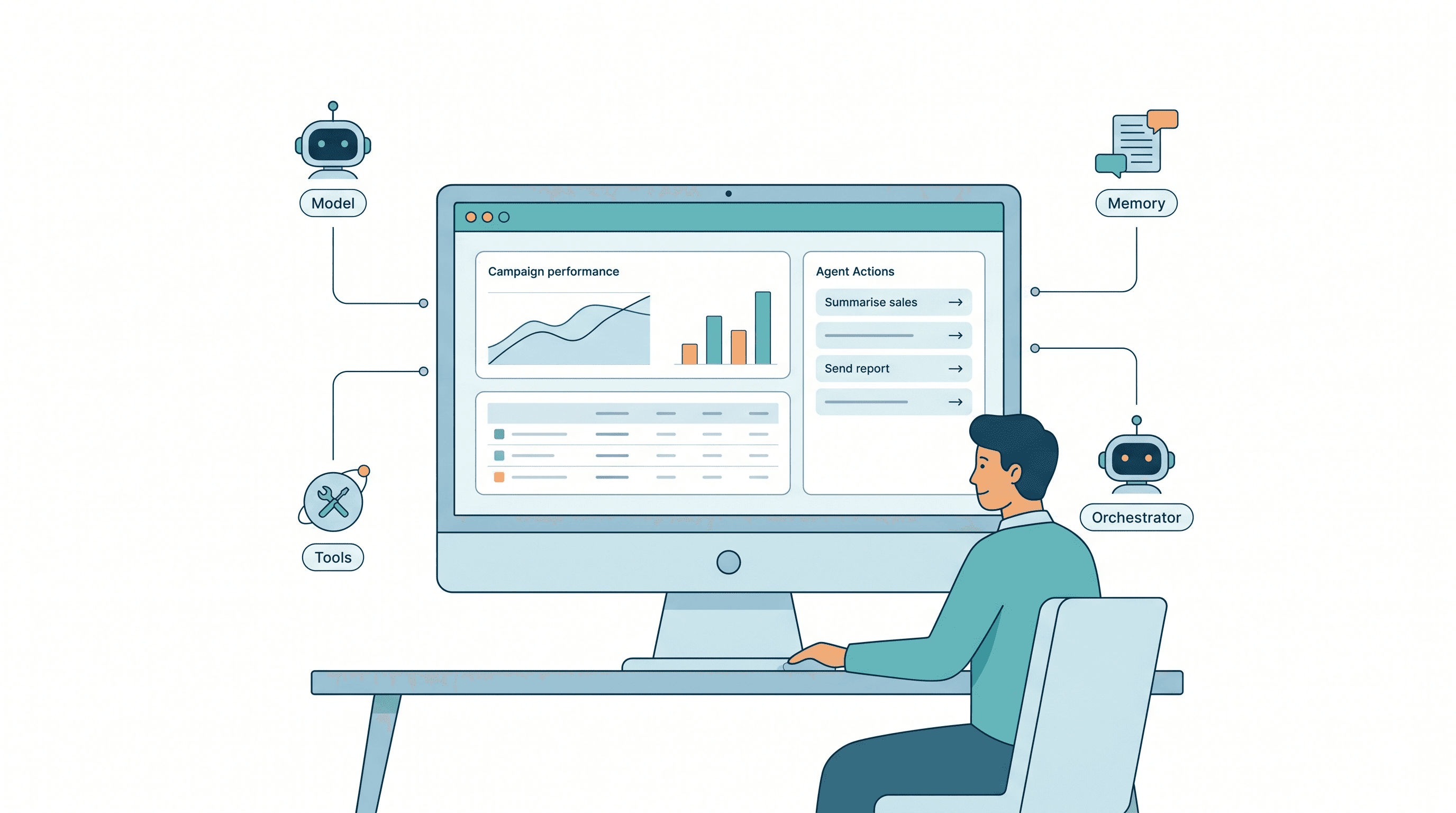
AI Agents Under The Hood: How They Really Work
This post explains that AI agents are not magic robots, but tools built on one simple trick: predicting the next word very well, then wrapping that prediction engine with rules, tools, and memory so it can actually do jobs for you. It shows how this setup lets you talk to software in plain language while keeping humans in control of what the agent can see, decide, and change.

Aravindhan
May 8, 2026
mcp
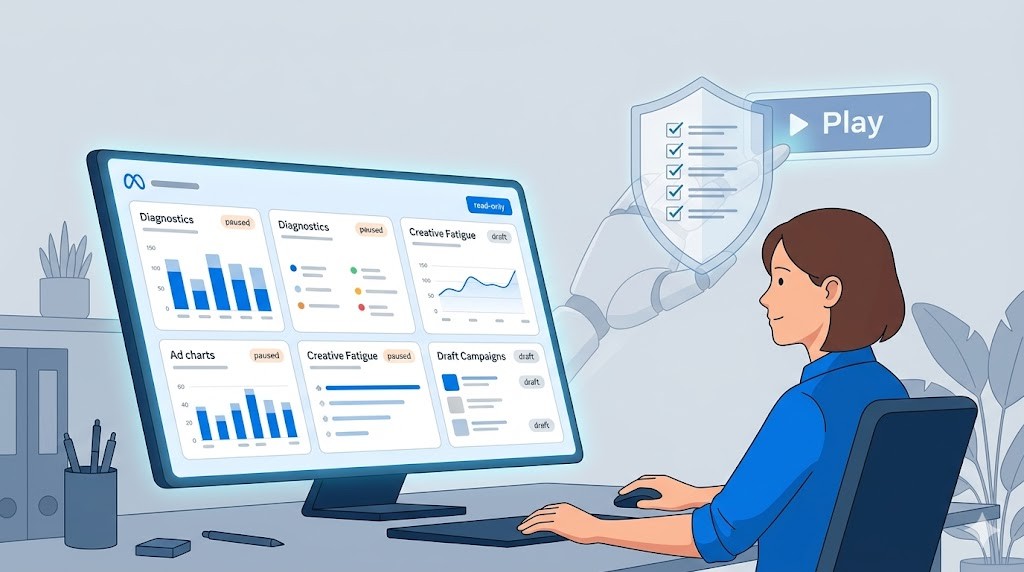
Treat Meta MCP Like An Analyst, Not A Buyer: Three Low‑Risk Ways To Start
MCP gives you a powerful AI layer inside Meta, but the risk is simple: it can move faster than your brand is ready for.

Anand Kumar
May 7, 2026
data
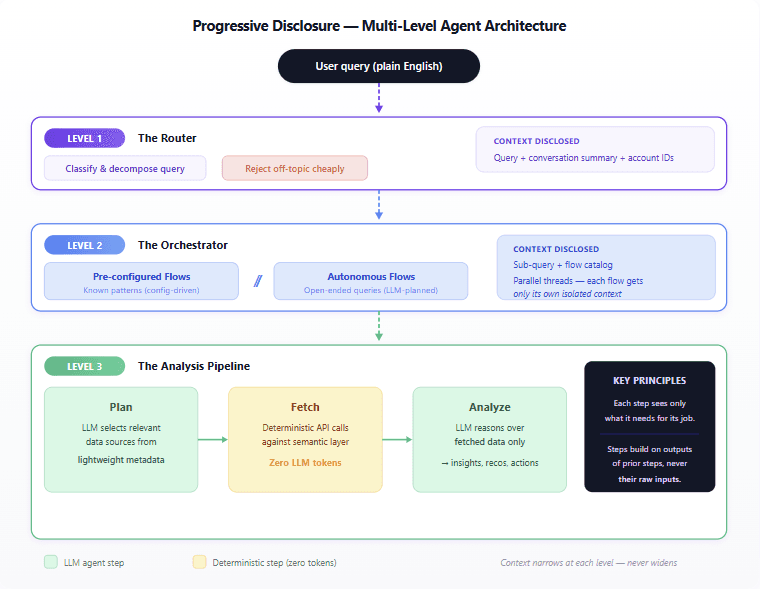
Context Engineering for Autonomous Marketing Agents: How We Went from Context Overflow to 90% Accuracy
We rebuilt our AI marketing analyst four times. Each iteration taught us something about the hardest problem in agentic systems: giving the model the right information at the right moment. Here's the full story — what broke, what worked, and the architecture pattern we landed on.

Aravind Nair
May 6, 2026
agents
AI Agents Under The Hood: How They Really Work
This post explains that AI agents are not magic robots, but tools built on one simple trick: predicting the next word very well, then wrapping that prediction engine with rules, tools, and memory so it can actually do jobs for you. It shows how this setup lets you talk to software in plain language while keeping humans in control of what the agent can see, decide, and change.
Aravindhan
May 8, 2026
mcp
Treat Meta MCP Like An Analyst, Not A Buyer: Three Low‑Risk Ways To Start
MCP gives you a powerful AI layer inside Meta, but the risk is simple: it can move faster than your brand is ready for.
Anand Kumar
May 7, 2026