
Reporting is solved. Decision making is not: why your next tool should not be just a dashboard
Fintech marketers are drowning in dashboards, but reporting is solved; decision-making is not. Traditional tools only show data; they don't tell busy teams what to change. Thirdi's AI agents solve this by connecting platform data with CRM truth to create a daily "to-do list" of concrete actions, no…
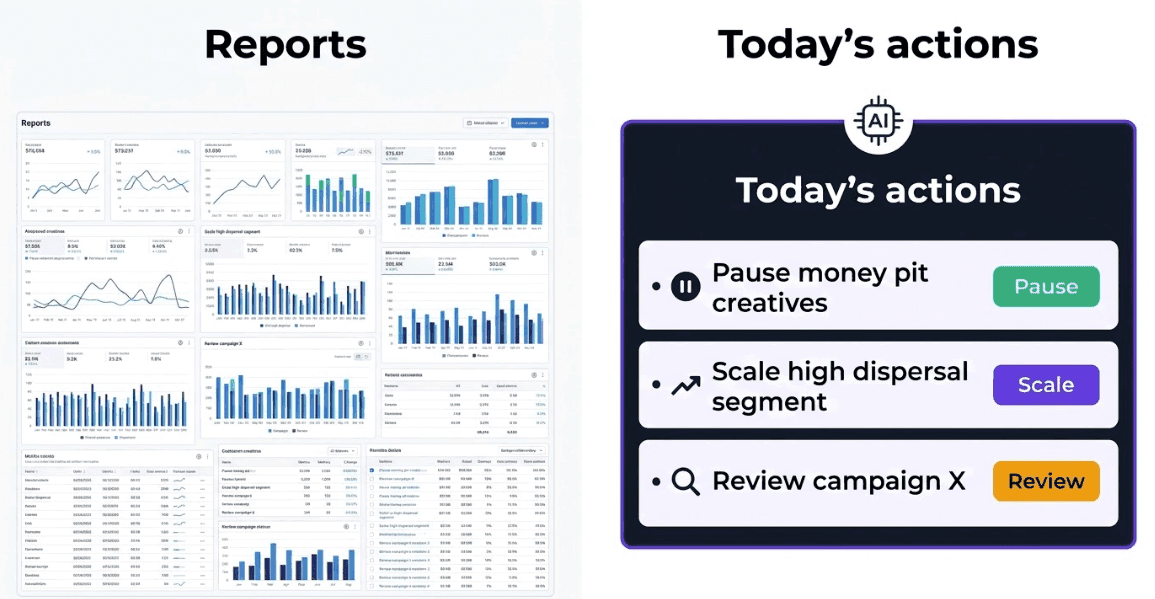
Most performance marketers we talk to are not short on dashboards.
Meta, Google, GA, MMPs, BI tools, internal sheets – the average fintech team already has more views of their funnel than they can comfortably scan in a day.
Yet when we sit in on their weekly reviews, the same scene plays out:
- three different reports show three different numbers
- half the meeting goes into agreeing on “what actually happened”
- the last ten minutes are used to decide what to change, usually based on gut feel and shortcuts
Reporting is not the problem anymore. Decision making is.
Where dashboards hit their limit
Traditional tools are great at one thing: showing you data.
They answer questions like:
- “How many leads did we get?”
- “What was our ROAS last week?”
- “Which campaign had the most spend?”
What they do not do is pick the 3 actions that really matter this week.
In fintech, where your real goal is to get good loans out the door at a healthy unit cost, that gap is painful. You know there is waste in the system. You know some campaigns are quietly dragging down the book. You just do not have the hours to hunt everything down by hand every week.
How we started thinking beyond reports
When we built Thirdi, we made a simple promise to ourselves: reporting would be the baseline, not the pitch.
Yes, we still pull your Meta and Google data into one place. Yes, we still build clean views and reusable reports. But the question we wake up with each day is:
“If someone opens our product for 10 minutes on a Monday, can we tell them exactly what to change before they close the tab?”
That is where the agents come in.
They:
- watch your spend 24/7
- connect platform metrics with CRM truth
- surface clear calls like:
- “these creatives are money pits, cut them”
- “these segments are hidden gems, give them more budget”
- “this campaign looks fine in Meta but breaks at dispersals, treat with caution”
The output is not another chart. It is a to-do list.
What this feels like for a busy team
For the USD 100k a month fintech team we worked with, this shift changed their week.
Instead of:
- spending the first hour of every day exporting and reconciling
- drowning in tabs
- ending meetings with “let us watch for another week”
they now:
- spend a few minutes skimming the agent’s calls
- sanity check them against what they know from the ground
- make 3–5 clear changes and move on
All the dashboards are still there in the background. They are just no longer the main interface.
We are biased, but we think this is where serious performance marketing is heading. Not “more data,” but better prompts: this is what changed, this is what you should fix first.
See this on your own accounts
third i connects to the platforms you already run and does this work against your live numbers.
Read more
View all articles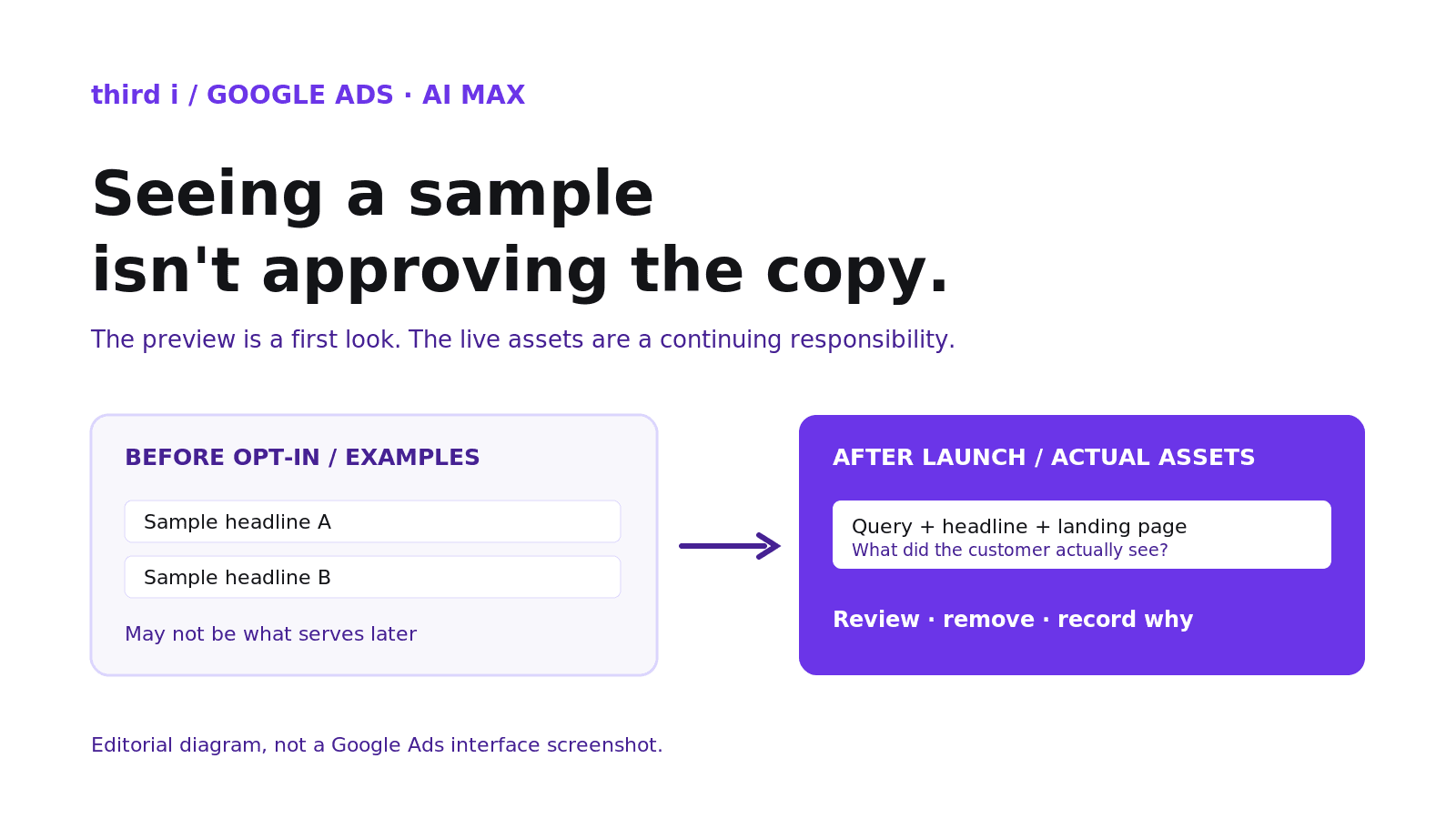
AI Max Copy Preview: Seeing a Sample Isn't Approving It
Google Ads now shows sample AI Max headlines before opt-in. Here is why previewing examples is useful, but does not replace reviewing the copy that actually serves.

How to Defend a 2027 Marketing Budget When the Numbers Disagree
Google, GA4 and the CRM disagree. What should an agency put in a 2027 marketing budget? An account review shows why the answer is not another dashboard.
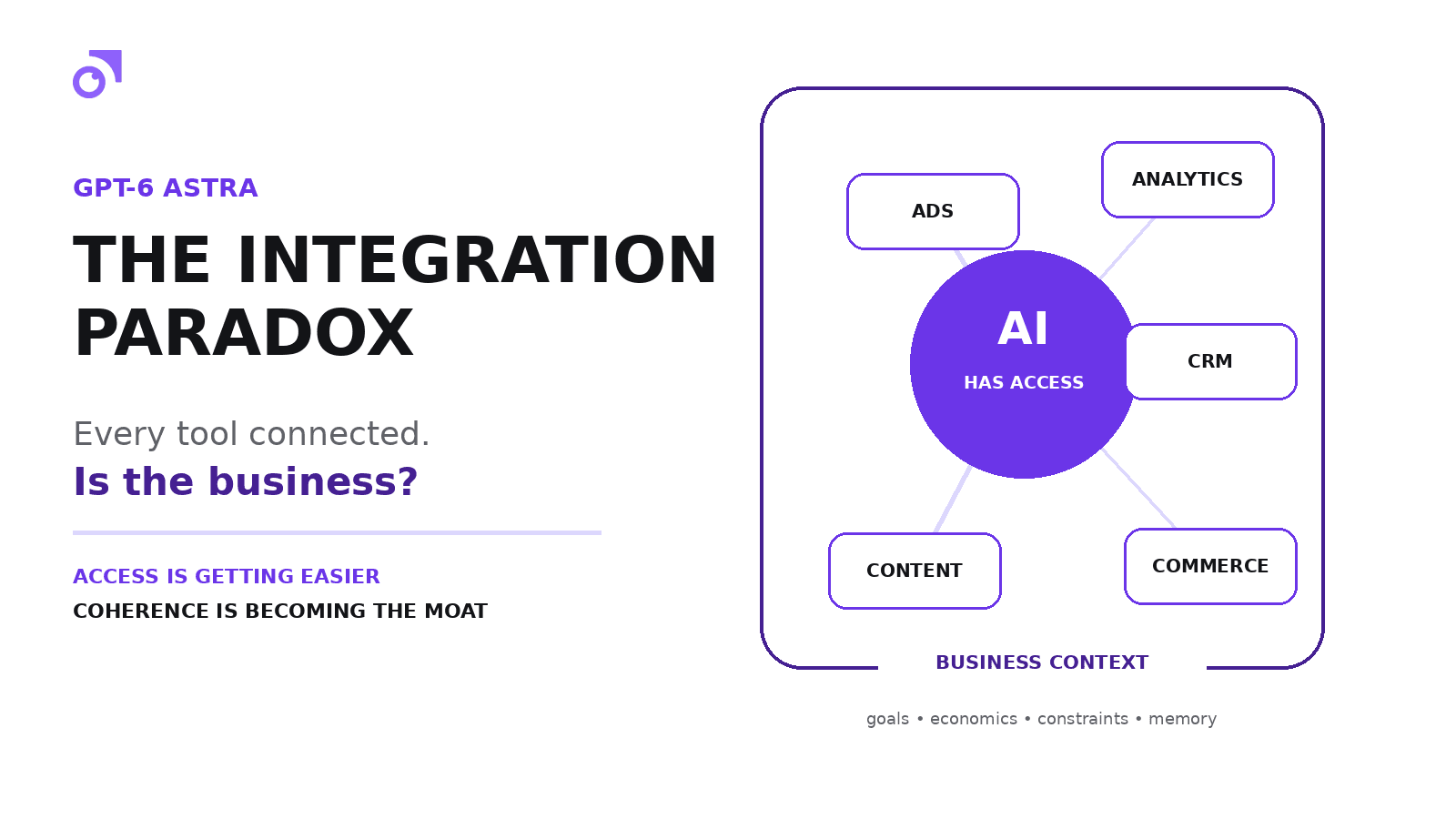
GPT-6 Astra and the Integration Paradox: When AI Can Use Every Tool, Business Context Becomes the Moat
GPT-6 Astra can operate more software, but useful marketing still depends on connected goals, economics, constraints, decision history and human approval.