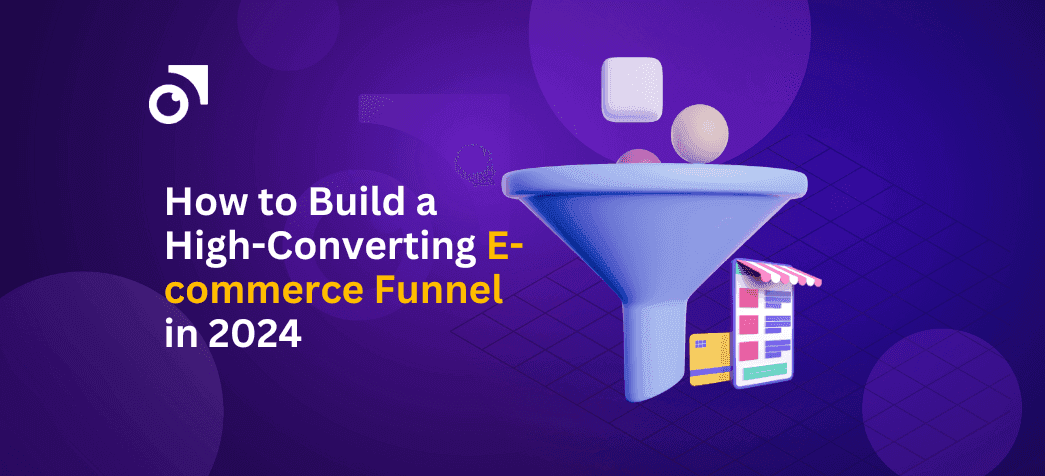
How to Build a High-Converting E-commerce Funnel in 2024

Nikita Saxena

What is an e-commerce funnel?

The e-commerce funnel covers the customer's journey from discovering your brand to making a purchase and becoming a loyal customer. An e-commerce funnel is carefully optimized to attract, engage, and convert visitors, with the ultimate goal of nurturing them into repeat customers.

An e-commerce funnel is divided into three parts:

  • The top of the funnel (TOFU), where curiosity is piqued

  • The middle (MOFU), where interest deepens

  • The bottom (BOFU), where decisions are made. 

These segments are further refined into six crucial stages, each playing a vital role in the customer's journey towards a purchase.

What are the stages of an effective e-commerce funnel?

  • TOFU

Awareness: This is the first impression you make on a potential customer.

  • MOFU

Interest: A prospect engages with your content and discovers your offerings.

Consideration: They compare your products with alternatives.

  • BOFU

Intent: The potential customer demonstrates a clear intention to purchase.

Conversion: The customer completes the transaction.

Retention: A one-time buyer becomes a loyal customer with repeat purchases.

How to Build an e-commerce funnel to increase online sales?

Awareness

Creating awareness depends entirely on how and where you position yourself. For example, an apparel brand spending heavily on LinkedIn marketing would barely get results. However, Instagram marketing might double the growth. The reason? The target audience for apparel brands thrives on Instagram.

Picture your ideal customer. Where do they hang out online? That's where you need to show up! It's all about being where your customers are, speaking their language, and catching their eye. You can achieve this through omnichannel marketing, targeted ads, and even blogs.

Interest

Once you have captured your audience’s attention, nurture them with valuable content. Tools like Thirdi for customer data analysis help you get insights into customer behaviors and patterns.

Use this data to personalize content, hit all their pain points, and showcase how your product or service solves their problem better than anyone else. Nurture leads with detailed product descriptions, customer reviews, and email marketing for consistent interaction.

Consideration

No matter how small the purchase is, we always compare for better options, don’t we? At this stage, leverage this behavior by providing comparisons and case studies to help prospects evaluate your product against competitors.

Highlight the unique selling points (USPs), address potential objections, and display all customer reviews to establish trust and transparency.

Intent

As the customer enters the bottom of the funnel, clear the possibilities of a prospect getting stuck over prices or features. Encourage intent by offering incentives such as discounts, free trials, or limited-time offers. This is crucial since conversion depends entirely on the customer's buying experience. 

As of 2024, 70.19% of customers abandon carts due to extra charges, long checkout processes, and slow processing time. Simplify the purchasing process with a user-friendly interface and clear calls to action (CTAs).

Conversion

Having a seamless checkout journey significantly elevates your conversion rates. Offer multiple payment options, provide a clear order summary, avoid hidden charges, and reassure customers with secure payment gateways. 

Provide clear shipping information and return policies to ensure trust. Another promising strategy is to implement retargeting ads and abandonment cart recovery emails to win back potential customers. 

Retention

The ultimate goal of converting a customer is retaining long-term loyalty. Engage your customers with personalized follow-ups and recommendations, loyalty programs, and excellent customer service.

According to the book Marketing Metrics, there is a 60% to 70% chance that an existing customer will buy from a business again, while there is only a 5% to 20% chance for a new prospect.

Examples of high-converting e-commerce funnels

Seltzer Goods

Seltzer Goods, a beverage company, experienced a significant rise in sales after a well-executed Facebook ad campaign.

Key strategy:

  • Identified their target audience by analyzing their interests, and behaviors through customer data.


  • Strategically ran creative ads on Facebook and Instagram for reach and engagement.


  • A/B tested different ad variations to identify the most effective strategies.

Seltzer acheived a 9.68x return on ad spend (ROAS), a 785% increase in monthly revenue, and a 183% increase in monthly organic traffic.

Stitch Fix

Stitch Fix leverages AI-powered algorithms for personalized styling services.

Key strategy:

  • Developed an AI system that learns from customer preferences and feedback to provide personalized recommendations


  • Created a detailed style quiz for new customers


  • Used AI to optimize inventory management and predict trends

Stitch Fix consistently grew their customer base by 17% year over year to over 3.5 million as of 2020, and had seven consecutive quarters of more than 20% revenue growth.

While e-commerce funnel optimization is simply a 6-step process, it needs precise strategy, creativity, and data-driven insights. Thirdi makes it easier for you by providing actionable insights, helping you make informed decisions and achieve your marketing goals effortlessly.

If you are looking to accelerate your brand growth with marketing, write to us at info@thirdi.ai for a free audit or contact us today.

What is an e-commerce funnel?

The e-commerce funnel covers the customer's journey from discovering your brand to making a purchase and becoming a loyal customer. An e-commerce funnel is carefully optimized to attract, engage, and convert visitors, with the ultimate goal of nurturing them into repeat customers.

An e-commerce funnel is divided into three parts:

  • The top of the funnel (TOFU), where curiosity is piqued

  • The middle (MOFU), where interest deepens

  • The bottom (BOFU), where decisions are made. 

These segments are further refined into six crucial stages, each playing a vital role in the customer's journey towards a purchase.

What are the stages of an effective e-commerce funnel?

  • TOFU

Awareness: This is the first impression you make on a potential customer.

  • MOFU

Interest: A prospect engages with your content and discovers your offerings.

Consideration: They compare your products with alternatives.

  • BOFU

Intent: The potential customer demonstrates a clear intention to purchase.

Conversion: The customer completes the transaction.

Retention: A one-time buyer becomes a loyal customer with repeat purchases.

How to Build an e-commerce funnel to increase online sales?

Awareness

Creating awareness depends entirely on how and where you position yourself. For example, an apparel brand spending heavily on LinkedIn marketing would barely get results. However, Instagram marketing might double the growth. The reason? The target audience for apparel brands thrives on Instagram.

Picture your ideal customer. Where do they hang out online? That's where you need to show up! It's all about being where your customers are, speaking their language, and catching their eye. You can achieve this through omnichannel marketing, targeted ads, and even blogs.

Interest

Once you have captured your audience’s attention, nurture them with valuable content. Tools like Thirdi for customer data analysis help you get insights into customer behaviors and patterns.

Use this data to personalize content, hit all their pain points, and showcase how your product or service solves their problem better than anyone else. Nurture leads with detailed product descriptions, customer reviews, and email marketing for consistent interaction.

Consideration

No matter how small the purchase is, we always compare for better options, don’t we? At this stage, leverage this behavior by providing comparisons and case studies to help prospects evaluate your product against competitors.

Highlight the unique selling points (USPs), address potential objections, and display all customer reviews to establish trust and transparency.

Intent

As the customer enters the bottom of the funnel, clear the possibilities of a prospect getting stuck over prices or features. Encourage intent by offering incentives such as discounts, free trials, or limited-time offers. This is crucial since conversion depends entirely on the customer's buying experience. 

As of 2024, 70.19% of customers abandon carts due to extra charges, long checkout processes, and slow processing time. Simplify the purchasing process with a user-friendly interface and clear calls to action (CTAs).

Conversion

Having a seamless checkout journey significantly elevates your conversion rates. Offer multiple payment options, provide a clear order summary, avoid hidden charges, and reassure customers with secure payment gateways. 

Provide clear shipping information and return policies to ensure trust. Another promising strategy is to implement retargeting ads and abandonment cart recovery emails to win back potential customers. 

Retention

The ultimate goal of converting a customer is retaining long-term loyalty. Engage your customers with personalized follow-ups and recommendations, loyalty programs, and excellent customer service.

According to the book Marketing Metrics, there is a 60% to 70% chance that an existing customer will buy from a business again, while there is only a 5% to 20% chance for a new prospect.

Examples of high-converting e-commerce funnels

Seltzer Goods

Seltzer Goods, a beverage company, experienced a significant rise in sales after a well-executed Facebook ad campaign.

Key strategy:

  • Identified their target audience by analyzing their interests, and behaviors through customer data.


  • Strategically ran creative ads on Facebook and Instagram for reach and engagement.


  • A/B tested different ad variations to identify the most effective strategies.

Seltzer acheived a 9.68x return on ad spend (ROAS), a 785% increase in monthly revenue, and a 183% increase in monthly organic traffic.

Stitch Fix

Stitch Fix leverages AI-powered algorithms for personalized styling services.

Key strategy:

  • Developed an AI system that learns from customer preferences and feedback to provide personalized recommendations


  • Created a detailed style quiz for new customers


  • Used AI to optimize inventory management and predict trends

Stitch Fix consistently grew their customer base by 17% year over year to over 3.5 million as of 2020, and had seven consecutive quarters of more than 20% revenue growth.

While e-commerce funnel optimization is simply a 6-step process, it needs precise strategy, creativity, and data-driven insights. Thirdi makes it easier for you by providing actionable insights, helping you make informed decisions and achieve your marketing goals effortlessly.

If you are looking to accelerate your brand growth with marketing, write to us at info@thirdi.ai for a free audit or contact us today.

Read more

compare

Third i vs Segwise: Creative Intelligence vs Full-Funnel Action Intelligence

Evaluating Segwise or looking for a Segwise alternative? Segwise is an AI-powered creative intelligence platform built specifically for mobile app and gaming advertisers. It automatically tags every element inside your ad creatives - video, audio, text, playable mechanics - and ties those elements directly to performance outcomes like ROAS, CPI, and CTR across 10+ mobile ad networks. Third i is an AI action platform for performance marketing agencies. It goes beyond creatives to analyze full-funnel performance across Meta, TikTok, Google Ads, LinkedIn Ads, and GA4 - and delivers a prioritized Action Feed telling you what to fix today. Flat $249 per month. No custom enterprise pricing required.

Vishal Singh

Apr 10, 2026

SEO

Most AI content does not rank (here is the real problem)

The core issue with most AI-generated marketing content is that it is created without real search data, leading to a high volume of URLs that receive almost no organic impressions because they fail to match modern user intent and search behavior. The breaking traditional SEO model of picking a broad keyword and writing a long post is ineffective now that users ask complex questions and often get answers directly in the SERP, requiring content to be grouped by specific intent rather than a single keyword. The proposed fix is a three-step workflow that flips the order: a) map real search demand using data tools; b) design a content map grouped by intent; and only then, c) bring in AI to draft within sharp, data-driven guardrails, turning AI into a fast worker rather than a flawed strategist.

Neeraj Kushwaha

Neeraj Kushwaha

Mar 30, 2026

compare

Third i vs Funnel.io: Data Pipeline vs Action Intelligence

Evaluating Funnel.io or looking for an alternative? Funnel.io is a marketing data hub that connects 600+ sources, normalizes your data, and pipes it into your BI tool, data warehouse, or reporting layer. It collects and cleans your data. Third i is an AI action platform that tells you what to do with your data. It connects Meta, TikTok, Google Ads, LinkedIn Ads, and GA4 and delivers a prioritized Action Feed ranking the most impactful changes you can make today. Flat $199 per month. No Flexpoints. No annual minimums.

Vishal Singh

Apr 3, 2026

compare

Third i vs Segwise: Creative Intelligence vs Full-Funnel Action Intelligence

Evaluating Segwise or looking for a Segwise alternative? Segwise is an AI-powered creative intelligence platform built specifically for mobile app and gaming advertisers. It automatically tags every element inside your ad creatives - video, audio, text, playable mechanics - and ties those elements directly to performance outcomes like ROAS, CPI, and CTR across 10+ mobile ad networks. Third i is an AI action platform for performance marketing agencies. It goes beyond creatives to analyze full-funnel performance across Meta, TikTok, Google Ads, LinkedIn Ads, and GA4 - and delivers a prioritized Action Feed telling you what to fix today. Flat $249 per month. No custom enterprise pricing required.

Vishal Singh

Apr 10, 2026

SEO

Most AI content does not rank (here is the real problem)

The core issue with most AI-generated marketing content is that it is created without real search data, leading to a high volume of URLs that receive almost no organic impressions because they fail to match modern user intent and search behavior. The breaking traditional SEO model of picking a broad keyword and writing a long post is ineffective now that users ask complex questions and often get answers directly in the SERP, requiring content to be grouped by specific intent rather than a single keyword. The proposed fix is a three-step workflow that flips the order: a) map real search demand using data tools; b) design a content map grouped by intent; and only then, c) bring in AI to draft within sharp, data-driven guardrails, turning AI into a fast worker rather than a flawed strategist.

Neeraj Kushwaha

Neeraj Kushwaha

Mar 30, 2026